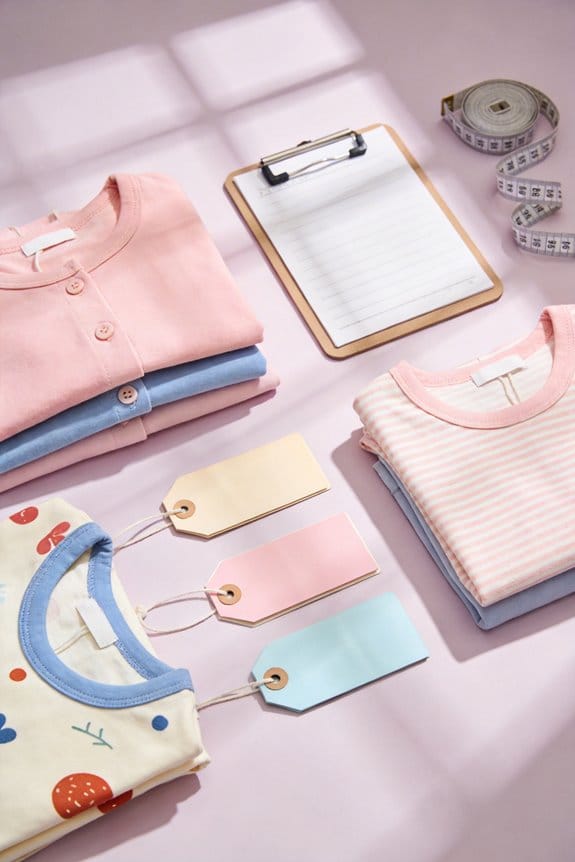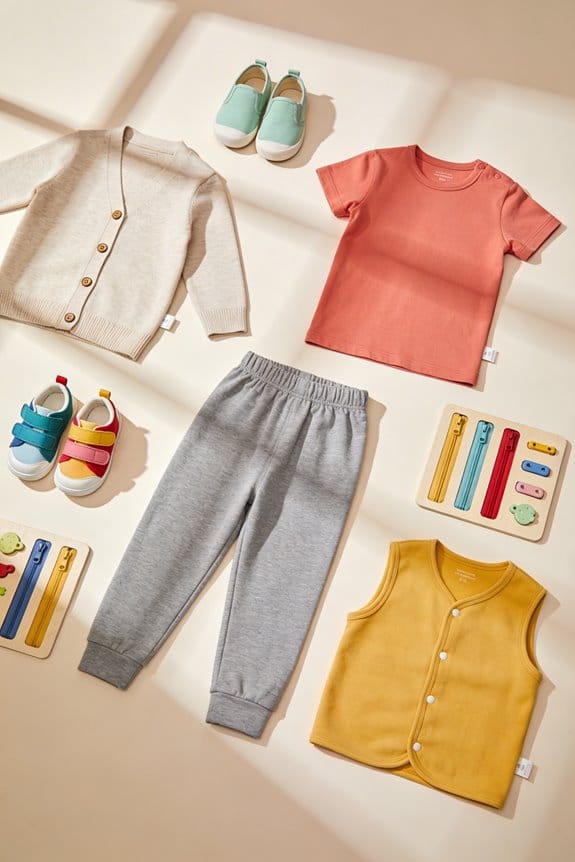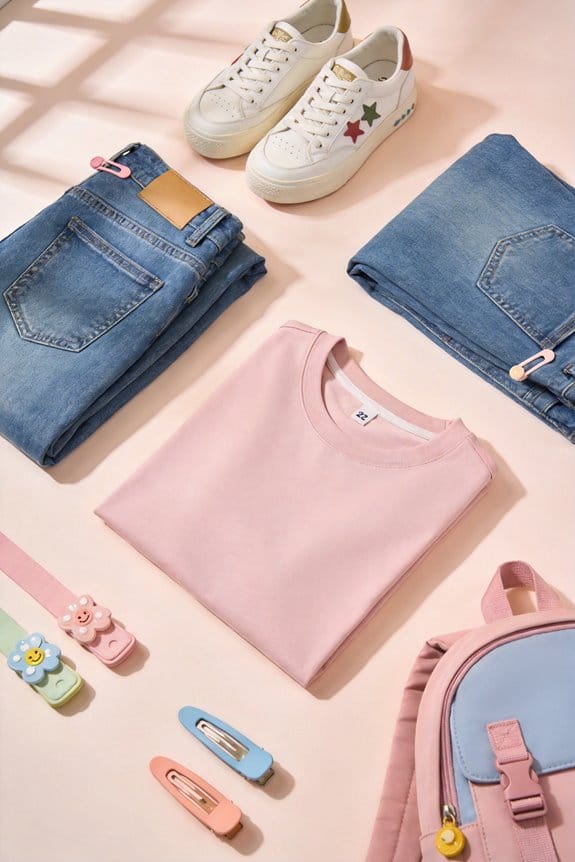

To effectively organize a kid’s school closet, we should start by removing outgrown clothing. A seasonal check helps us keep only the items they can wear. Next, we can utilize labeled bins and drawer dividers for better organization. Planning outfits each week simplifies our mornings, while flexible storage solutions allow kids easy access to their clothes. By fostering responsibility, we’ll create a space that encourages independence. If we apply these strategies, we’ll guarantee a functional and organized closet.
Key Takeaways
- Conduct seasonal checks to remove outgrown clothing and maintain a designated donation bin for easy decluttering.
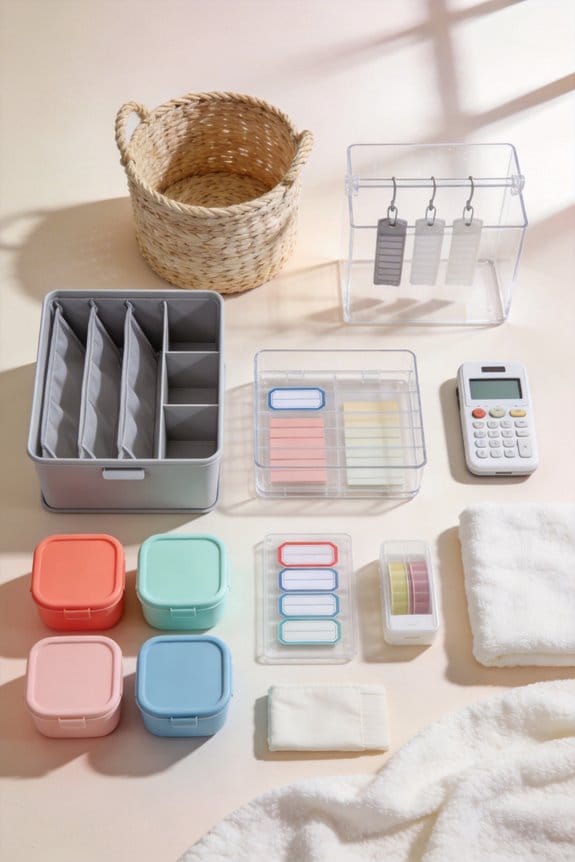
- Use organizers like drawer dividers and baskets, and label all storage for quick identification by kids.
- Set up a weekly outfit planning routine each Sunday, utilizing mix-and-match items to streamline morning decisions.
- Ensure storage solutions are accessible and age-appropriate, promoting kids’ independence in choosing and storing their clothes.
- Schedule regular wardrobe refreshes to engage your children in donating unused items, fostering responsibility and ownership.
The Importance of Organizing a Kid’s School Closet
Imagine those frantic mornings when kids are scrambling to find their socks while you’re trying to juggle breakfast and a few last-minute reminders. Sound familiar? That’s why getting a school closet organized can be a huge relief. When kids can locate their clothes without a hitch, it not only saves time but cuts down on the stress for everyone involved.
So, how do you get started? Creating a simple system can work wonders. Here’s the trick: use categorized bins or hanging organizers for uniforms. Color-coding or labeling can make it even easier for little ones to recognize where everything goes. It’s not just about tidiness; it gives them a chance to be independent and take some responsibility for their stuff.
And don’t forget about keeping that closet in check! Regularly tidying up can make a big difference. This way, laundry and clutter aren’t looming over you like a dark cloud. You’ll know where everything is, and getting out the door in the morning won’t feel like an Olympic event.
Honestly, maintaining a consistent setup in their school closet goes a long way in teaching kids accountability. They start making decisions about their outfits, which is a step toward growing up. Additionally, selecting breathable materials for school clothing can ensure children stay comfortable throughout the day. So, what do you think? Are you ready to tackle that closet?
How to Identify and Remove Outgrown Clothing
Do you ever feel like your kid’s closet is bursting at the seams? Keeping it organized can seem like a never-ending battle, especially as your child grows. That’s why it’s so important to regularly identify and remove outgrown clothing.
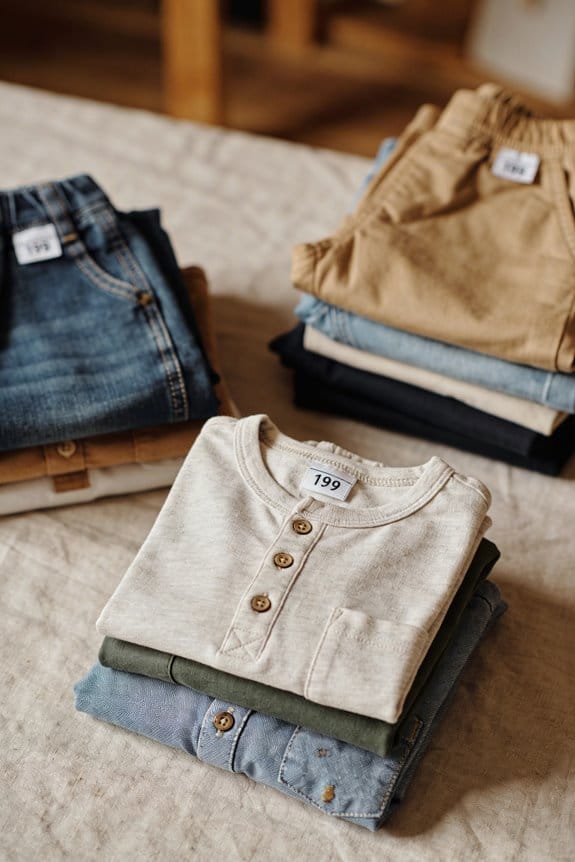
Start by checking their wardrobe every season to see what still fits. Encourage your child to try on clothes since sizes can vary a lot between brands. You’ll be amazed at how easily you can spot those pieces that no longer work. Here’s the trick: set up a designated donation bin for any clothing that doesn’t fit anymore. This makes the whole decluttering process smoother and teaches kids the importance of letting go.
Limiting storage can also help. Try to keep just one “Grow Into” bin per child. Fill it only with items you truly believe they’ll wear soon, so it doesn’t turn into another clutter trap. It’s also a good idea to schedule regular clothing reviews every few months—right before school starts or with the changing seasons—so you always have a closet packed with clothes that fit.
Choosing the right fabrics, like breathable organic cotton, can also make a significant difference in your child’s comfort throughout the school day.
Truth is, with a bit of proactive planning, you can maintain a neat and functional space for your kids. What do you find most challenging about organizing their clothes?
Best Strategies for Efficient Closet Organization
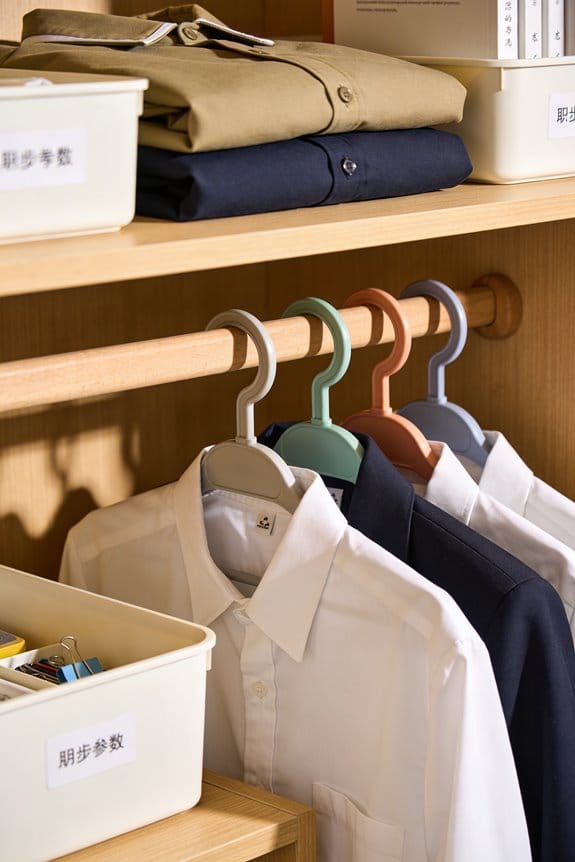
How can we make our children’s closets not just organized, but actually efficient? Let’s face it, kids can accumulate clothes faster than you can blink, and it can get overwhelming. A great way to tackle this is by sorting through their clothes using a top-to-bottom, left-to-right method. This approach lets you really evaluate each piece and decide what’s worth keeping, donating, or passing down.
Try this: invest in some drawer dividers and cute baskets. They’re perfect for organizing kids’ clothing by type, making it super easy for them to find what they need. It’s also a good idea to keep a donation bin handy for all those outgrown items. This keeps your space clutter-free and teaches kids about managing their belongings.
Labeling drawers and bins can do wonders. It helps younger children identify where everything goes, and trust me, it saves you from hearing, “Mom, where did I put my favorite shirt?” Plus, storing seasonal items in labeled bins makes finding school shoes and outfits a breeze, simplifying those hectic mornings. And coming back to that independence piece—when kids can dress themselves without constant help, it boosts their confidence. Additionally, selecting clothing made from soft, breathable fabrics can make daily dressing more comfortable and encourage kids to dress themselves.
Create a Weekly Outfit Planning System?
Do your mornings often feel like a crazy race against the clock? If you’re like many parents, you know the struggle of getting kids out the door while juggling breakfast, backpacks, and that elusive matching outfit. Here’s a simple idea: dedicate some time each Sunday to plan out your kids’ outfits for the week. This little shift can make a big difference.
By setting up a weekly outfit planning system, you can turn chaotic mornings into smooth sailing. Spend a few minutes on Sunday picking out clothes for the week. Try this: grab a visual outfit planner or a hanging organizer to lay out each day’s attire. It not only minimizes decision-making time but also allows your kids to choose their clothes independently. They’ll love having the freedom to pick from outfits that are already coordinated, giving them a sense of ownership over their styles.
Consider having a wardrobe with around ten tops and ten bottoms that mix and match easily. This way, you’re not overwhelmed with too many options, and your kids can get creative with what they wear. Plus, you’ll want to keep the weather in mind as the school year starts. Make sure they have appropriate clothing ready for the week ahead.
Including versatile clothing items like balloon sleeve sweaters can add both comfort and style, making layering easy for varying temperatures.
So, why does this matter? It’s all about simplifying your mornings. It’s not just you who benefits; your kids will also enjoy feeling confident in their outfit choices. Honestly, wouldn’t you rather spend those precious morning minutes sipping coffee rather than hunting down that perfect shirt?
In short, taking a little time to plan outfits can lead to smoother mornings and more independent kids. What’s your favorite method for streamlining morning routines?
Choosing Kid’s Closet Storage Solutions for Organization
When it comes to organizing your kids’ closets, picking the right storage solutions is key to keeping things tidy. Adjustable shelving is a great way to go. It gives you the flexibility to change things around as your little ones grow and their needs change.
Ever noticed how kids can struggle to reach things on higher shelves? Adding lower shelves and bins can make a world of difference. You’ll find that younger kids can easily grab their clothes and pick out outfits without your help. Also, don’t overlook hooks for backpacks and coats. They’re perfect for maximizing that vertical space, and they really help to cut down on clutter.
For those smaller items, like socks and accessories, try using drawer or hanging organizers. They help keep everything neat and ensure that those tiny mismatched socks don’t disappear into the abyss. And here’s the trick: label those storage containers clearly! This simple step makes it easier for both you and your kids to find what you need in a snap.
Choosing storage materials that are durable and easy to clean can improve longevity and practicality, much like the sturdy wear found in easy-to-maintain baby khaki pants.
So, why does this matter? By creating a functional space, you’re teaching your kids responsibility and good organizing habits. In the end, you’re setting your family up for a more organized home that adapts as your kids grow.
In a nutshell, organizing your kids’ closets can be simpler than it seems. What are some of your favorite tips for keeping kids’ spaces tidy?
Ways to Keep Your Closet Organized All Year
Keeping kids’ closets organized can feel like an uphill battle, right? But it doesn’t have to be this way. With a little planning and some simple strategies, you can tackle the clutter and keep things tidy year-round.
Start by creating a weekly cleaning routine. It might be a little tough at first, but trust me, it’ll help the kids develop good habits. When they know that it’s time to tidy up each week, their spaces will naturally stay more organized. Consider adjustable storage solutions too. Lowering shelves as they grow means you won’t have to keep changing the setup every couple of years.
Another thing you shouldn’t overlook is the seasonal refresh. Take some time to go through their clothes every few months. This is when you can declutter those outdated items and fill up donation bins. It’s a nice way to make space for new things and teach kids about giving back, so why not make it a family activity?
Labeling storage bins can be a lifesaver. If your kids can easily see what’s inside their boxes, they’re more likely to put things back where they belong. Plus, it fosters independence as they start to identify their items without asking for help.
Creating personalized spaces is a great way to avoid conflicts, especially in shared closets. If each child has their own designated area, mornings can be a lot smoother. Honestly, who wants to deal with a closet full of shared chaos before school?
Also, using clothing made from high-quality fabrics like 100% cotton can make daily outfit choices simpler and more comfortable, which helps keep closet organization manageable.
Frequently Asked Questions
What Is the 70/30 Wardrobe Rule?
The 70/30 wardrobe rule encourages us to prioritize minimalist kids’ clothing—70% versatile pieces, 30% seasonal items. This approach optimizes closet space, supports our kids’ style evolution, and guarantees dressing for success remains effortless and efficient.
What Is the 80 20 Rule for Wardrobe?
So, we’ve all got a never-ending wardrobe, right? The 80/20 rule says our essentials make 80% of our looks; let’s focus on size assessment, color coordination, and outfit planning, simplifying our clothing rotation and seasonal storage.
What Is the Rule of 3 for Cleaning Closets?
The Rule of 3 for cleaning closets involves sorting items into keep, donate, and discard. By involving our kids, we can apply decluttering techniques, enhance closet storage, and effectively implement donation strategies with organization products.
What Are Common Closet Organization Mistakes?
We often see kids’ wardrobe mishaps from overloading shelves, inefficient hanging methods, and inadequate labeling systems. Regular seasonal clothing swaps and thoughtful shoe storage solutions can greatly improve organization and independence in our children’s closets.