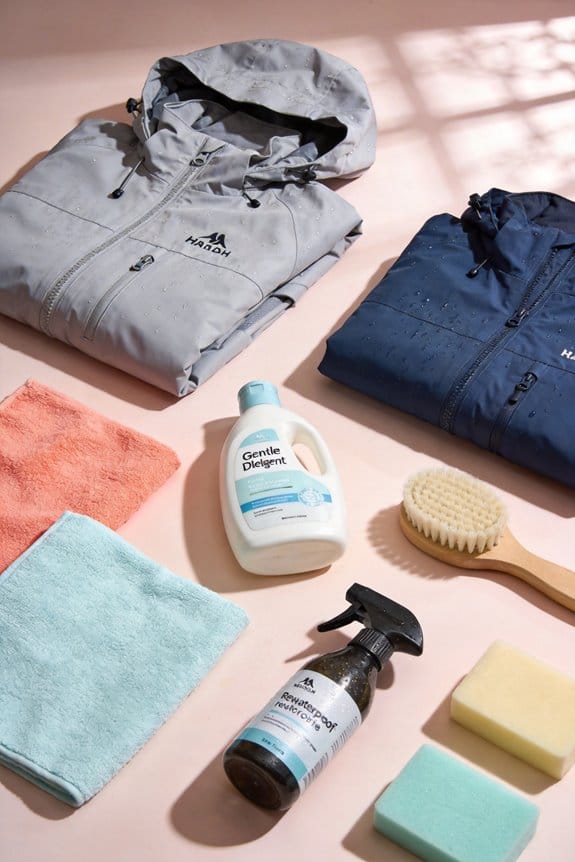

To properly wash and re-waterproof our rain jackets, we should start by checking for dirt and water absorption issues. We can then use a gentle detergent, like Nikwax Tech Wash, on a gentle cycle. After washing, we’ll reapply waterproofing agents such as Nikwax TX.Direct while the jacket is damp. To activate the durable water repellent (DWR) coating, we can tumble dry on low heat. Storing jackets in a cool, dry place will also help maintain their condition. There’s more to learn about specific fabrics and their care.
Key Takeaways
- Wash your rain jacket after 7-10 wears or when visible dirt and stains appear, using Nikwax Tech Wash on a gentle cycle.
- Ensure all pockets are empty, zippers are closed, and Velcro is fastened before washing for effective cleaning.
- Check for “wetting out” signs; if water doesn’t bead after washing, it’s time to reapply the DWR treatment.
- Apply a waterproofing treatment like Nikwax TX.Direct Wash-In while the jacket is damp, then rinse thoroughly.
- Reactivate the DWR coating by drying the jacket completely using low heat in a dryer or ironing with a cloth.
Why Cleaning Your Rain Jacket Is Important
Cleaning your rain jacket is more important than you might think. Ever noticed how after a few hikes or rainy days, your jacket doesn’t seem to repel water like it used to? That’s because dirt, debris, and even oils from your skin can build up and interfere with its waterproof properties.
Here’s the trick: those contaminants stop the durable water repellent (DWR) coating from doing its job. Instead of water beading off, it starts soaking into the fabric, which is the last thing you want when you’re out in the elements. To keep your jacket performing its best, it’s good practice to wash it regularly with a technical cleaner like Nikwax Tech Wash.
You don’t have to do this every time you wear it, but aim for a wash after about 7-10 wears or if you’ve had a particularly sweaty or muddy adventure. And don’t forget, adding re-waterproofing to your routine every season can make a huge difference. Proper maintenance not only keeps your jacket in top shape, but it can also extend its lifespan, so it’s ready for any storm you may encounter.
Honestly, taking a little time to care for your gear goes a long way. So, why not give that jacket a thorough cleaning and refresh its water repellency? It’s a small effort for a big payoff. How do you keep your outdoor gear in shape for unpredictable weather?
Be sure to follow the manufacturer’s instructions and consider the durability and maintenance features when choosing products for cleaning and reproofing.
Recognizing the Right Time to Wash Your Waterproof Jacket?
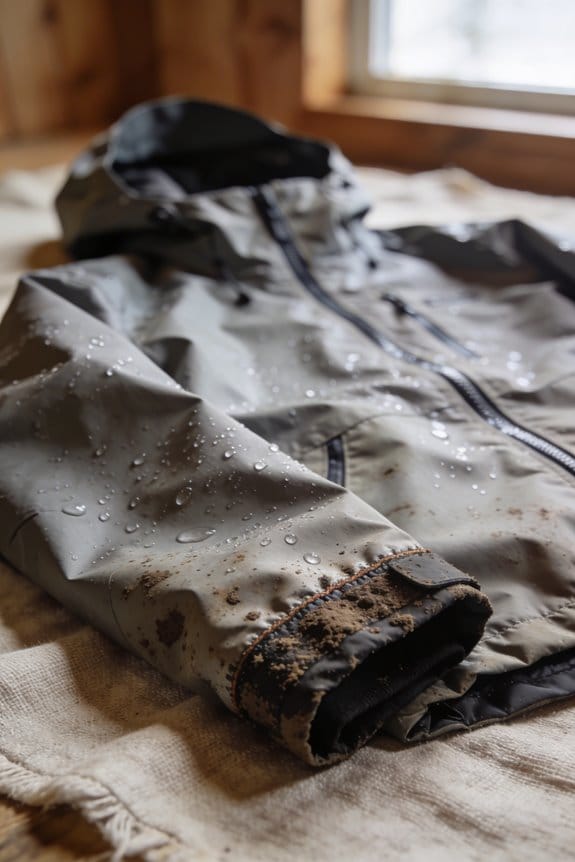
Recognizing when to wash your waterproof jacket is key to keeping it in top shape. Ever had that moment when you step outside and notice your jacket isn’t repelling water like it used to? That’s called “wetting out.” Water should bead up and roll off, not soak in. When that happens, it’s time to give your jacket a wash.
Visible dirt or stains from your adventures, like mud or sunscreen smudges, are other signs it’s cleaning time. After a few hikes or weeks of wear, consider how your jacket looks. Honestly, you won’t enjoy the outdoors as much if you’re constantly damp because your jacket isn’t performing well.
Here’s the trick: Aim to wash it every 7-10 wears or after you’ve taken it on longer trips. And if you notice that water still isn’t beading after you wash it, you might need to restore the durable water repellent (DWR) finish.
Also, understanding the importance of breathable fabrics can help maintain comfort while ensuring your jacket stays functional and comfortable during active outdoor use.
Preparing Your Jacket for Washing
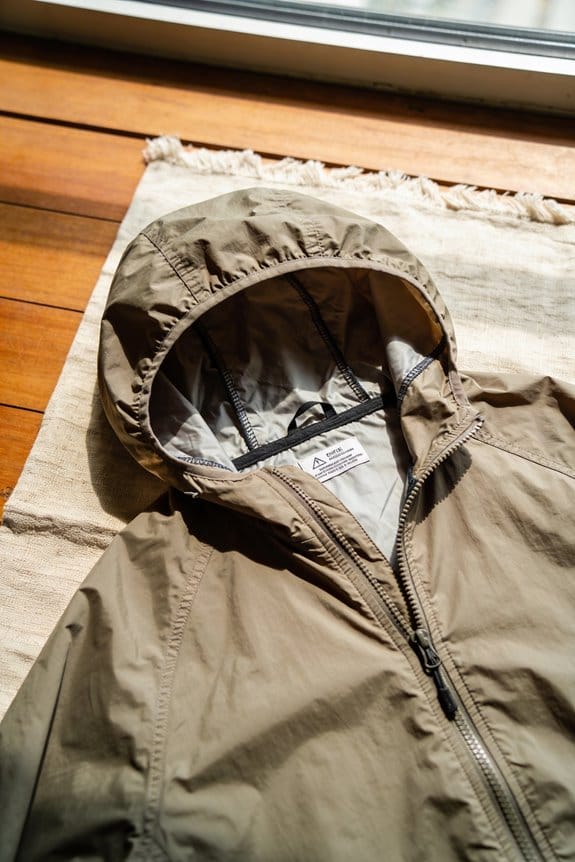
Washing your rain jacket might seem straightforward, but if you want it to last, prepping it is key. Ever ended up with a ruined jacket because you forgot something in the pocket? It happens! Start by emptying all pockets to prevent any surprises during the wash. Leave them open and loosen the drawcords on the hood and hem. This little trick allows for a thorough clean and stops water from getting caught.
Next, you want to fasten any Velcro and zip up the jacket all the way. This will protect it from snagging on things. Don’t skip checking the care label. Trust me; those instructions from the manufacturer are there for a reason. They might have specific recommendations that can really make a difference in how your jacket washes up.
And what about those pesky visible stains? Honestly, a bit of spot-cleaning can go a long way. You’ll not only maintain the jacket’s look but also make sure it continues to perform as a waterproof layer for years to come.
To sum it up, preparing your jacket properly for washing can help keep it in top shape. Remember, using machine washable materials can simplify the washing process and extend your jacket’s life.
So, what’s your go-to trick for caring for your outerwear?
Effective Cleaning Techniques for Your Waterproof Jacket
Ever found yourself staring at a muddy rain jacket and wondering how to bring it back to life? Cleaning your waterproof jacket doesn’t have to be a pain, but you definitely want to be thoughtful about it. Using the right products can really help keep that jacket performing well.
Try this: grab some Nikwax Tech Wash. It’s a detergent made specifically for waterproof fabrics, and you’ll be glad you did. Before throwing it in the washer, make sure to zip up all the zippers and fasten any hook-and-loop straps. This prevents any snags that could mess things up. Choose a gentle cycle to keep the fabric nice and intact.
Got any greasy spots? Here’s the trick: mix some diluted Tech Wash and use an old toothbrush to spot-clean those trouble spots. It’s a simple step that can save you from a full wash. Once you’re done washing, it’s super important to rinse thoroughly—nobody wants leftover soap residue ruining their jacket.
Don’t forget to check the care label for any specific instructions they might have. Honestly, you should steer clear of fabric softeners too. They can do more harm than good by ruining your jacket’s ability to repel water.
For continued protection, consider applying a water-resistant treatment after washing to maintain the jacket’s ability to block moisture.
How to Tell When Your Jacket Needs Re-Waterproofing?
Have you ever been caught in the rain and realized your jacket isn’t keeping you dry like it used to? That’s when you might need to think about re-waterproofing. If you see visible soaking or water pooling on the fabric, it usually means the durable water repellent (DWR) coating is wearing off. Check for water beading up on the surface; if it’s not doing that, the DWR isn’t doing its job anymore.
Also, dirt or grime that builds up on your jacket can make it harder to clean, which can affect its water resistance even more. So, what’s the best way to stay ahead? Regularly assess your jacket, especially after heavy use, to see if it’s still doing its job. Here’s the trick: aim to re-waterproof your jacket every season or after 3 to 5 washes to ensure it performs well when you really need it.
Apart from these checks, consider the conditions you typically expose your jacket to. Honestly, even the best jackets need a little TLC to keep them in top shape. So, after a soggy day outside, take a minute to give your gear a quick inspection. Keeping it in great condition is worth the extra effort. Using water-resistant and windproof fabrics can also help maintain your jacket’s protective qualities longer.
How to Reapply Waterproofing to Your Jacket
Ever had your waterproof jacket let you down just when you needed it most? It happens to the best of us, especially after multiple washes. If you want to keep that jacket working like it should, reapplying waterproofing is crucial.
Start by cleaning your jacket. Grab a specialist tech wash—Nikwax Tech Wash works great for this. Trust me, this step is key. When the jacket’s clean, you create a solid surface for the waterproofing to really stick.
Now, it’s time for the fun part: applying the waterproofing treatment. I recommend Nikwax TX.Direct Wash-In. The best part is you should do this while the jacket is still damp. This helps the treatment absorb better. After you’ve applied it, be sure to rinse the jacket thoroughly, getting rid of any leftover product.
And don’t skip checking the care label for drying instructions! Using a low or no-heat setting is important to reactivate that durable water repellent (DWR) coating. So, have you ever dealt with a soaking wet jacket on a hike? Avoid that drama by keeping up with your waterproofing.
In short, keeping your jacket waterproof takes a little effort but goes a long way. What’s your go-to trick for maintaining outdoor gear?
Tips for Reactivating Your Jacket’s DWR Coating
Want your rain jacket to work as it should? It’s all about that DWR (Durable Water Repellent) coating. When it’s functioning properly, water beads right off, keeping you dry and comfortable. But over time, that coating can wear off, and that’s where reactivation comes into play.
After washing your jacket with a technical cleaner like Nikwax Tech Wash, the next step is crucial. You should apply a waterproofing treatment, such as Nikwax TX.Direct, while the fabric’s still damp. This helps the treatment bond better. After you’ve done that, you’ll want to let it dry completely.
Here’s the trick: once the jacket is dry, toss it in the tumble dryer on low heat for about 20 minutes, or if you don’t have a dryer, you can carefully use an iron with a dry cloth between the iron and your jacket. This step really helps to “activate” that DWR coating, restoring its water-repellent abilities.
So, how do you know when it’s time to reactivate your DWR? Watch for wetting out symptoms—when water starts soaking into the fabric rather than beading up on the surface. It’s a telltale sign that your jacket needs some love. To keep it functioning well, consider reapplying the DWR treatment each season or after heavy usage. Using proper care instructions ensures your jacket maintains its performance and longevity.
In short, keeping your jacket’s DWR coating fresh isn’t just smart; it’s essential for effective waterproofing. Are you ready to give your jacket the care it deserves?
Caring for Different Waterproof Fabrics
Caring for waterproof fabrics can feel overwhelming, can’t it? You want your jackets to keep you dry without falling apart, but knowing how to properly care for them is key.
When it comes to materials like GORE-TEX, you should definitely reach for Nikwax Tech Wash. It’s a great way to maintain that Durable Water Repellent (DWR) layer and ensure breathability stays intact. Just be sure to follow the package instructions for the right amount; you wouldn’t want to go overboard.
Laminated fabrics? They do best with wash-in treatments. Hardshell jackets that have liners may require spray-on waterproofers; that’s how you keep their performance up to par. And if you’ve got something like a Waxed Cotton Jacket, spot-cleaning is the way to go. Going for a full wash could strip that natural water repellency, so just stick to cleaning the dirty spots.
Regular maintenance every 7-10 wears is a solid practice to extend the life of your gear. Truth is, using detergents that are free from PFCs, dyes, brighteners, and fabric softeners matters a lot. Those residues can mess with your jacket’s water-repellency, and that’s the last thing you want when you’re caught in the rain.
Choosing the right products is essential, much like selecting soft fabrics for baby bodysuits that prioritize comfort and safety.
Best Practices for Storing Your Clean Jacket
How many times have you pulled out your rain jacket only to find it’s not in the best shape? Storing it properly is key to keeping it ready for your next adventure.
First off, make sure you find a cool, dry place to stash your jacket. Direct sunlight can really mess with the fabric and make it degrade over time. Before you tuck it away, ensure that it’s completely dry. This is crucial—nobody wants to deal with mildew!
Now, when it comes to storage, here’s the trick: don’t just fold it up. Hang it on a wide hanger instead. This little action helps it keep its shape and avoid damaging the fabric. If you have a breathable storage bag, that’s a bonus! It allows any leftover moisture to escape, which means less chance of funky odors or bacteria hanging around.
And don’t forget to check on your jacket every now and then. Look for signs of any damage or dirt. This way, you can ensure it stays in top shape for when you need it next.
For added longevity, periodically refreshing the jacket’s waterproof coating is important to maintain its waterproof rating and keep it weather-resistant.
Frequently Asked Questions
How Do You Make a Rain Jacket Waterproof Again?
To make our rain jackets waterproof again, we can use effective waterproofing techniques, clean breathable materials, and maintain fabric care. Applying waterproof coatings guarantees our outdoor gear stays protected during our adventures. Let’s keep our jackets functional!
How Do You Wash and Reproof a Waterproof Jacket?
When we tackle jacket maintenance, we first check care labels. Using appropriate washing methods for fabric types, we wash and reproof, then apply waterproof treatments, drying thoroughly using specified drying techniques to guarantee longevity and performance.
How to Reactivate a Waterproof Jacket?
To reactivate our jacket’s waterproof technology, we should apply heat after it’s dry. This fabric treatment enhances the moisture barrier, extends jacket lifespan, and improves outdoor performance—essential for our seasonal maintenance routine.
How Do I Reproof It After Washing?
After washing, we should use effective waterproofing techniques like TX.Direct Wash-In. Depending on fabric types, we might prefer spray application. Always consider drying methods; product recommendations suggest heat for the best reproofing results.