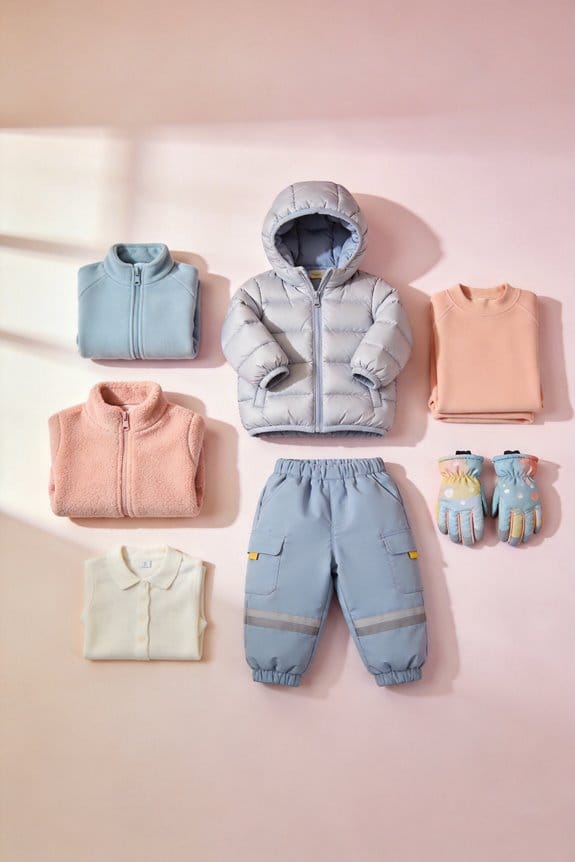
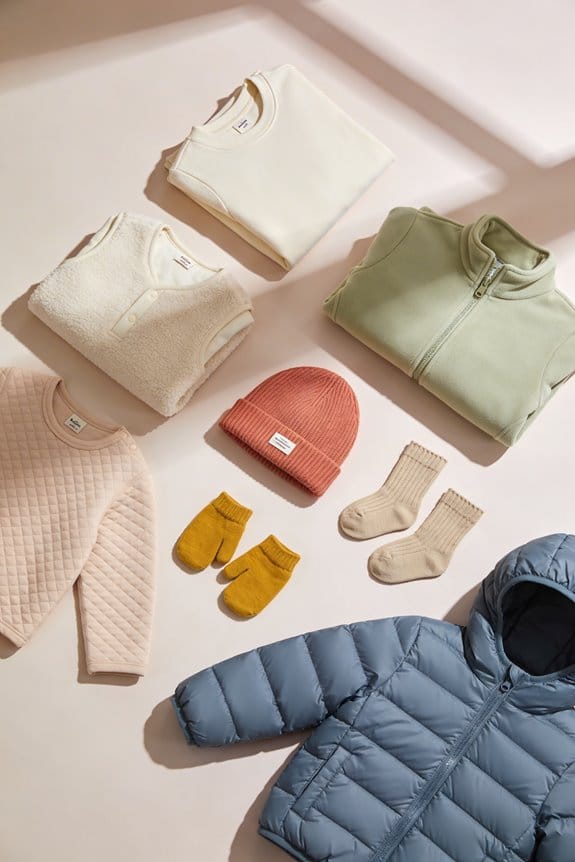

When it comes to dressing our babies for winter, we should follow a three-layer system. First, we choose a moisture-wicking base layer made from materials like merino wool. Next, we add a cozy insulating middle layer, such as fleece. Finally, we top it off with a waterproof outer layer. This approach keeps our little ones warm while allowing us to easily adjust their layers based on temperature changes. Let’s explore practical tips to guarantee our baby’s comfort in winter conditions.
Key Takeaways
- Dress your baby in three layers: a moisture-wicking base layer, an insulating fleece middle layer, and a waterproof outer layer for warmth and protection.
- Always choose materials wisely; avoid cotton for the base layer and opt for merino wool or synthetic fabrics instead.
- Monitor your baby’s comfort by checking for signs of overheating, such as flushed cheeks or sweating, and adjust layers as needed.
- Include essential accessories like hats, mittens, and booties to minimize heat loss from extremities during winter outings.
- Ensure safe dressing practices, particularly when buckling in a car seat; avoid bulky clothing and use a loose blanket for warmth.
How to Effectively Layer Your Baby for Winter Warmth
How to Effectively Layer Your Baby for Winter Warmth
Dressing your baby for winter can feel overwhelming, right? You want to make sure they stay warm and cozy without overheating. The good news is that layering is key, and it’s easier than it sounds when you break it down into a three-layer system.
Start with the base layer. Choose moisture-wicking materials like cotton onesies that help keep your baby dry and comfortable by pulling moisture away from the skin. This is crucial for managing body temperature and preventing chills. Picture those chilly winter days when you’re out and about; it’s essential your little one is dressed just right.
Next up is the middle layer, the part that really makes a difference in keeping your baby warm. Cozy fleece sleepers are perfect for this; they trap heat and provide an extra barrier against the cold. Think about how often you feel that need for warmth when it’s freezing outside—your baby feels that, too.
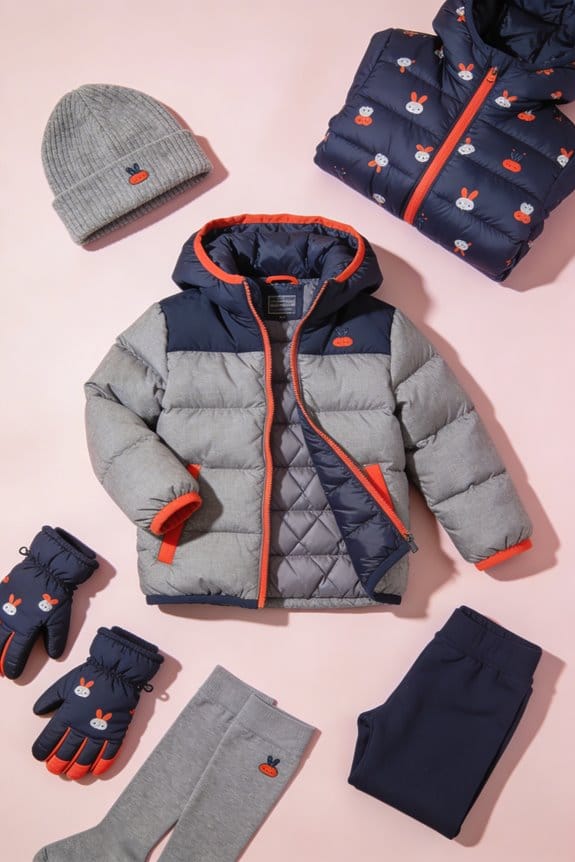
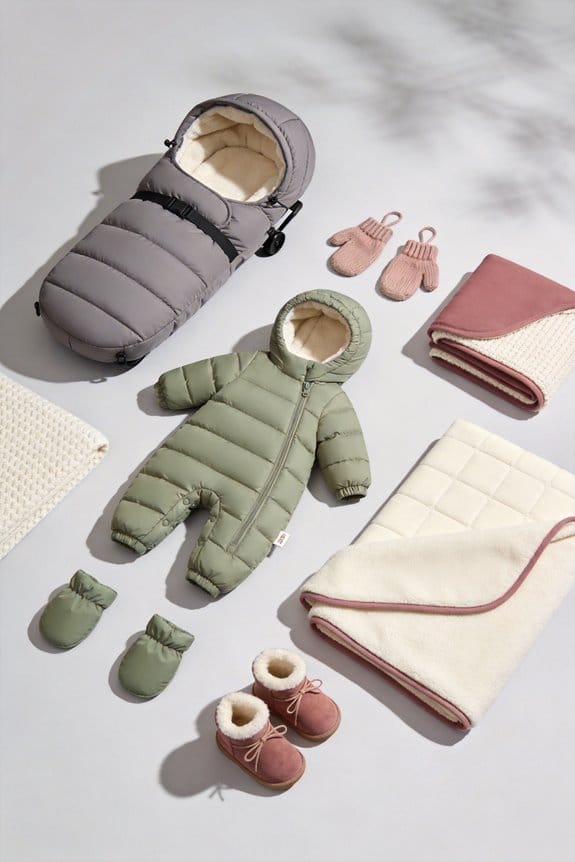
Finally, you’ll want an outer layer like a waterproof snowsuit or bunting bag. This layer is your fortress against wind and moisture, keeping your baby dry and protected from the harsh winter elements. Don’t forget those must-have accessories! Hats, mittens, and booties are essential because their little heads and extremities lose heat quickly.
For the outer layer, consider options with water-resistant materials to ensure your baby stays dry and protected from winter weather.
The Essential Three-Layer System for Dressing Babies
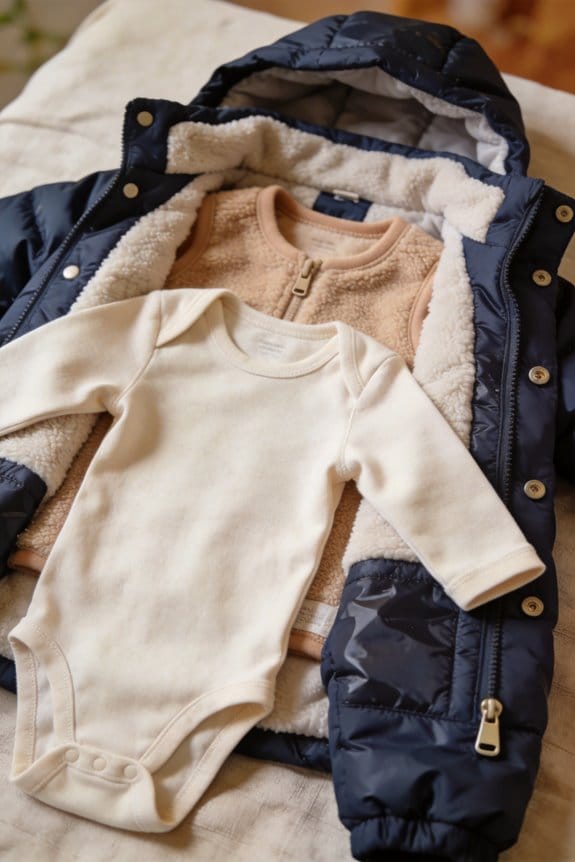
Wondering how to keep your little one warm during those chilly winter outings? It’s essential to understand the three-layer dressing system to ensure your baby stays cozy and protected.
Start with a moisture-wicking base layer. A simple cotton onesie does the trick to keep your baby’s skin dry. Then, think about an insulating middle layer—something like a fleece sleeper or a soft sweater is perfect for trapping heat. Finally, don’t forget about a waterproof outer layer. A good snowsuit or a snug bunting bag will shield your baby from wind and moisture.
And let’s not overlook the accessories! On those really cold days, be sure to add mittens, warm hats, and booties. These little extras keep those tiny extremities protected.
It’s also helpful to choose suits made from water-resistant and stain-repellent materials for easy maintenance and durability.
Once you’ve got your baby dressed, check their comfort level at the chest or neck. If you can feel warmth, but they’re not sweaty, you’re in good shape. So, why does this matter? Keeping your baby comfortable ensures they can enjoy winter activities safely.
To sum it up, layering is key when it comes to dressing babies for winter. What’s your go-to method for keeping your little ones warm?
Choose the Right Materials for Each Layer
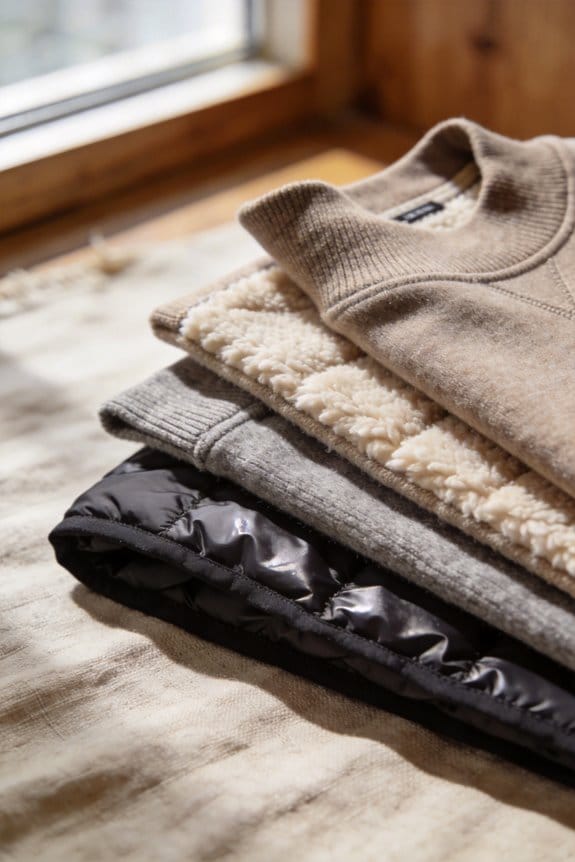
Choosing the right materials for your baby’s winter outfit can feel overwhelming. You want them to stay warm and dry, but where do you start?
For the base layer, go for merino wool or synthetic fabrics. These materials are great at wicking moisture away from the skin, which keeps your little one cozy. Just skip the cotton; it tends to hold onto moisture, leading to potential chill.
When it comes to the middle layer, think about using insulating fleece or wool. These fabrics trap heat but are also breathable, which is key for comfort.
Now, the outer layer is where you really want to protect your baby from the elements. Look for waterproof and wind-resistant materials to shield against the cold wind and any snow. With thin layers, you can easily check for signs of overheating and make adjustments if needed.
Truth is, dressing your baby properly for winter isn’t just about warmth—it’s about comfort and safety too. For added comfort, it’s important to select outfits made from high-quality materials such as 100% cotton or GOTS-certified organic cotton to ensure softness and breathability.
What’s your go-to strategy for keeping your little one snug in chilly weather?
Ensure Your Baby’s Comfort While Dressing
Ensuring your baby’s comfort while dressing is so important, especially during those chilly winter months. You might wonder how to keep your little one snug without overheating or making them feel restricted. The key is to dress them in one extra layer compared to what you’re wearing.
For outdoor play, here’s the trick: start with a moisture-wicking base layer, like a cotton onesie. Next, add an insulating fleece layer for warmth, and top it all off with a snowsuit or bunting. Don’t forget the essentials—like a winter hat and gloves or mittens—to keep those little hands and ears warm. It’s amazing how much of a difference proper winter gear makes!
When you’re securing your baby in the car seat, it’s best to skip bulky clothing. Instead, buckle them in and then drape a loose blanket over them. This trick helps keep their skin dry and comfortable without compromising safety.
Now, indoors is a bit different. You want to ensure your baby’s cozy but not overly hot. Breathable fabrics are ideal, and lightweight sleep sacks can provide a comfortable sleep environment. So, why does this matter? A comfortable baby means happier parents and less fuss.
Selecting jackets that meet OEKO-TEX standards can provide added safety and peace of mind when dressing your infant for winter.
How to Spot If Your Baby Is Too Hot or Cold?
How can you tell if your baby is feeling too hot or too cold? It’s such a common concern for parents, and figuring it out can be a bit tricky sometimes. First off, pay attention to your baby’s skin and overall demeanor. If you see flushed cheeks or notice damp hair, or if their back or chest feels sweaty, they might be overheating.
On the flip side, if their hands and feet are cold, their skin looks pale, they’re shivering, or they seem unusually lethargic, then they may be too cold. It’s really important to check their neck or chest for an accurate idea of their warmth, since those tiny hands and feet don’t always tell the whole story.
Try this: regularly adjust their clothing based on how they feel and the environment around them. Layers are your best friend because they allow you to add or remove clothes easily. Just remember, staying attuned to these signs can help keep your little one comfy and safe. Choosing jackets made of breathable cotton fabric can also help regulate their temperature effectively.
Frequently Asked Questions
What Age Should I Start Layering My Baby for Winter?
We can start layering baby clothing for winter as early as newborns. Prioritizing infant comfort and using appropriate fabrics helps with temperature regulation during outdoor activities, addressing seasonal challenges and ensuring winter safety with essential winter accessories.
How Do I Know if the Layers Fit Correctly?
To guarantee layers fit correctly, we should check for comfort, flexibility, and accessibility. Each layer’s sizing matters, along with fabric breathability and durability for temperature regulation. Regular adjustments help us get the right combinations.
Can I Use Regular Clothing for the Three-Layer System?
We can use regular clothing for the three-layer system, but it’s best to choose breathable options and moisture-wicking fabrics. Proper layering techniques guarantee insulation, temperature regulation, and ultimate comfort for outdoor activities with our babies.
How Often Should I Check My Baby’s Temperature Outdoors?
We should check our baby’s temperature every 30 minutes outdoors. Knowing the signs of cold exposure and using a thermometer helps guarantee their comfort during winter activities, while proper layering techniques keep them safe in chilly weather.
Are There Specific Brands Recommended for Winter Baby Gear?
We recommend brands like Columbia and Patagonia for winter gear. Their baby jackets, insulated mittens, thermal onesies, and waterproof boots use quality materials and layering fabrics. Plus, they often feature safety and sustainable options worth exploring.