
Patching holes in the knees of jeans is a great way to save money and reduce waste. We can use sturdy fabrics, like scrap denim, for effective patches. For a hand-patch, we turn the jeans inside out, cut a rounded patch larger than the hole, and secure it with stitches. Alternatively, we can apply fabric glue for a quicker fix. Adding colorful or patterned patches can make the jeans unique. If you’re interested, there’s more to explore about patching techniques and ideas.
Key Takeaways
- Use colorful scrap fabrics or patterned textiles to create unique and eye-catching patches on your jeans’ knees.
- Incorporate embroidery or fabric paint to add personal flair and personality to the patched areas.
- Experiment with bold prints like plaid or floral designs to enhance the visual impact of your repairs.
- Try stenciling or creating printed designs on patches for distinctive and artistic looks on your jeans.
- Engage children in the patching process with fun iron-on patches to make it a bonding experience.
Why Is Patching Better Than Discarding Jeans?
Have you ever thought about why patching up your jeans might be a better choice than just tossing them out? Repairing your favorite pair not only makes them last longer but also saves you some cash on constant replacements. Instead of adding more to the fabric waste piling up in landfills, you can give those beloved jeans a second life.
Here’s the thing: patching isn’t just practical; it can actually bring people together. When you decide to mend your jeans, you might find yourself sharing skills and resources with friends who love sustainability just as much as you do. Plus, there’s something really rewarding about transforming a worn-out item into something unique and personal.
So, why does this matter? Think about the message it sends. Engaging in patchwork lets you showcase your creative side and make a statement. You can design something that truly reflects who you are. It’s amazing how one small act can foster a mindset of wise living, encouraging resourcefulness and a deeper appreciation for quality clothing.
The best part is that patching your jeans supports a more sustainable lifestyle. By making this choice, you’re contributing to a healthier planet for future generations. Remember, it’s all about making smart choices that align with your values! Choosing materials that promote sustainable manufacturing practices further enhances the positive impact of your clothing repairs.
What You Need to Patch Your Jeans
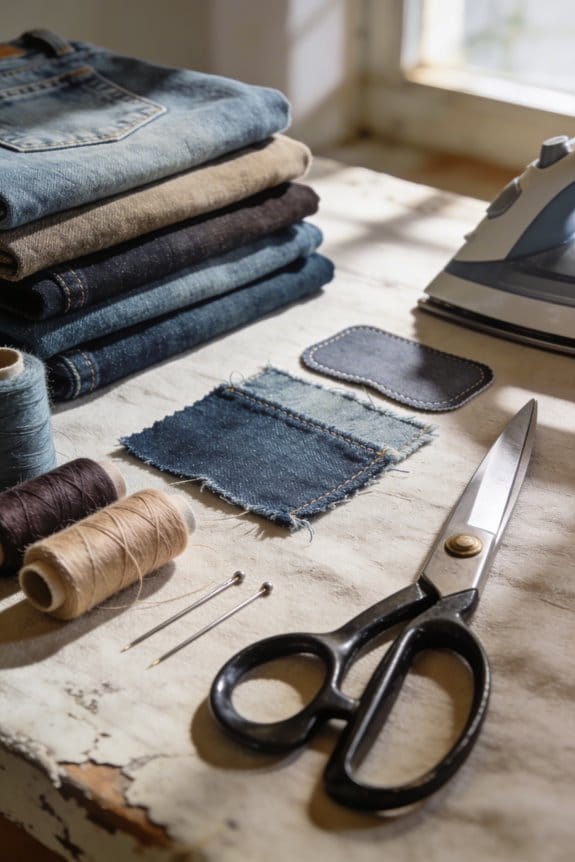
Patching your jeans can feel like a DIY win, especially when it saves your favorite pair from the trash. But before you dive in, it’s crucial to gather the right tools and materials.
First off, go for some sturdy bottom weight fabrics—scrap denim works great. You’ll also want thread that matches your jeans closely. These essentials will make a difference. Don’t forget about some trusty scissors for cutting the patches, pins to hold everything in place while you work, and an iron to prep the area around the tear.
As for the patch itself, here’s the trick: you want to cut it at least an inch larger than the hole. This extra bit helps ensure it’ll hold up well. And a quick tip? Round off the corners of your patch. This small detail can really cut down on stress points that might cause more tears later on.
Using durable materials similar to those recommended for baby booties can extend the life of your jeans repair.
Once you have everything ready, you’re well on your way to giving those jeans a new lease on life. So, why does this matter? Because each patch tells a story and adds character to your jeans—plus, it’s much more eco-friendly than tossing them out.
In short, with a bit of preparation and the right tools, you can tackle your jean repair easily. What old jeans do you have lying around just waiting for a little love?
Step-by-Step Guide to Patching Jeans by Hand
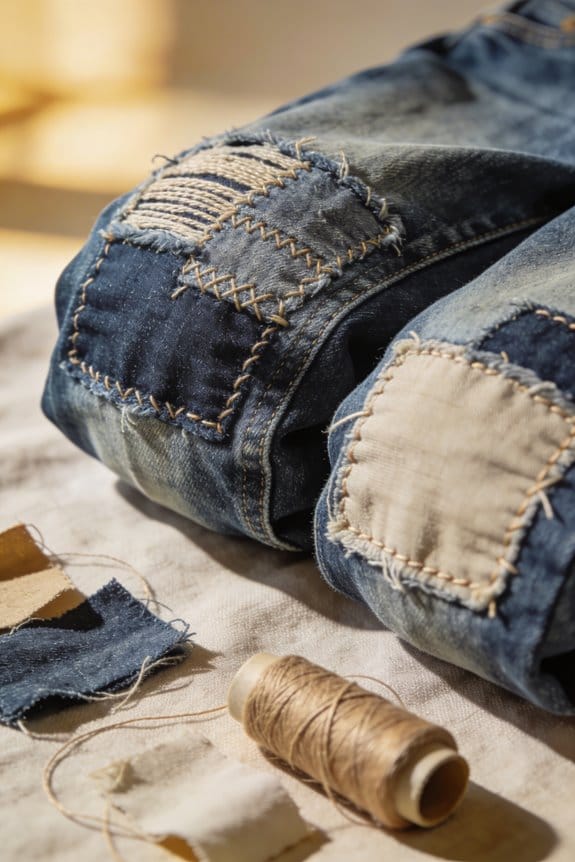
Got a pair of jeans with a hole that just won’t quit? It happens to the best of us, and fixing them by hand can save you money and time.
First things first, turn your jeans inside out and give that area around the hole a good press. This will help smooth out any wrinkles and make it easier for you to patch. Now, grab some scrap denim and cut out a piece that’s at least one inch bigger than the hole, with rounded corners. This little trick will help reduce tension spots that could otherwise cause the patch to pull up later.
Next up, let’s get that patch secured. Use an overcast stitch all around the edges first to keep everything in place. Then, switch to a zigzag stitch along those exposed threads. Here’s the trick: keep sewing in a spiral pattern until you feel confident the patch can take a good amount of wear and tear. And don’t forget about thread color! Picking a shade that closely matches the denim will make your work almost invisible once you’re done.
So, why does this matter? Repairing your jeans not only extends their life but also keeps things fun and personal. With just a little bit of effort, you’re saving money and getting to showcase your own handiwork. Using durable fabrics with moisture-wicking properties can also enhance the longevity of patches, especially in high-friction areas like knees.
In short, patching those jeans can be a rewarding project. Have you thought about trying it out yourself?
No-Sew Patching Techniques That Save Time
Got a hole in your favorite jeans and no time to sew? No worries! No-sew patching techniques might just be your best friend. With a bit of fabric glue, you can easily cover up those pesky rips, and it’s a lifesaver, especially for busy parents with kids who love to play hard.
Start by cutting a patch that’s about an inch bigger than the hole. This extra fabric helps keep everything secure. Apply fabric glue around the edges of the patch—don’t skimp on this! Firmly press the patch down, and for some extra peace of mind, add a bit more glue around the edges. Let it dry completely; this step is key if you want it to hold up through wash after wash.
So, why does this matter? Because we all know how quickly kids can turn a nice outfit into a work of art, and fabric glue makes for a speedy fix! While fabric glue is a reliable option, feel free to experiment with other types of glue. Just be sure to share your findings with others; it’s great to learn from each other’s experiences.
The best part is that this method is both efficient and allows for a little creativity in mending jeans. Just think of it as a chance to add some flair to your wardrobe while fixing those little mishaps.
In short, you can easily tackle those rips without a sewing needle in sight. Have you tried no-sew techniques before? What’s your go-to hack for repairing clothes?
For added sustainability, consider using patches made from organic cotton fabrics to reduce environmental impact while mending your clothes.
Creative Patch Design Ideas for Your Jeans
When you find a hole in your favorite jeans, it’s easy to feel frustrated. But instead of tossing them aside, why not turn that little problem into an opportunity for some creativity? Embracing the patching process can be a lot of fun and a way to showcase your personal style.
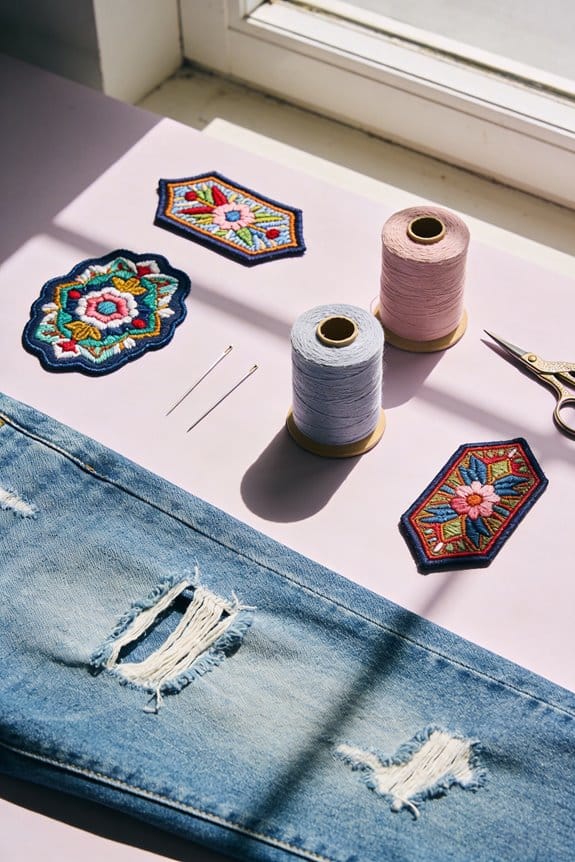
Try this: Grab some scrap denim in different colors and textures. Sew or glue those patches right over the holes to give your jeans a fresh look. And don’t stop there! Why not add some embellishments? A touch of embroidery or some fabric paint can turn a simple patch into a real conversation starter.
Honestly, something bold can make a significant impact. Experiment with fabrics like plaid or floral prints to really make your patches pop. Feeling artistic? Use stencils or printed designs to create unique looks. These fun elements can really pull your outfit together and add a touch of personality.
If you’ve got kids, involving them in the patching process can be memorable. Incorporating fun iron-on patches makes it a great activity that they can enjoy. It’s a perfect way to turn repairs into a fun project you all can do together.
To sum it up, don’t let those holes bring you down. Instead, think of them as your jeans asking for a makeover. What unique style will you create for them? Also, consider pairing patched jeans with stylish fitted coats to complete a trendy and cozy winter look.
Community Tips for Repair Success
How can you make sure your patching efforts stick around for the long haul? Engaging in community discussions can be a great start. When you share your own experiences with different patching techniques, it often opens up new ideas that could really boost your repair game.
You’ll definitely want to gather feedback on fabric glues, because not all of them perform equally well. Some might last longer than others, and knowing which ones hold up could save you a lot of hassle down the line. Consider trying out unique patches made from colorful scraps or fun patterned fabrics. Not only do they add a personal touch to your repairs, but they can also bring some extra strength where it counts.
If you’re facing specific challenges, like fixing a pair of work jeans that have seen better days, don’t hesitate to reach out for tips. Work jeans often need different patching techniques compared to those casual pairs. You might discover a method that works wonders and share it will only strengthen the community bond.
It’s also a good idea to document your patching outcomes. This not only helps you track what works best, but it can also encourage others to share their successes and learnings. In doing so, we can foster a culture of sustainable practices that make our repair journeys a little easier and a lot more successful.
For extra comfort while wearing your patched jeans, consider using soft seams in your repair process to reduce irritation and enhance durability.
Frequently Asked Questions
How to Fix Holes in the Knees of Jeans?
To fix holes in our jeans, let’s release our creativity! From sewing patches to fabric glue, we can transform them into unique statements while customizing our style. Let’s get crafty and give those jeans new life!
How to Fix Ripped Jeans Knee Without Sewing?
We can fix ripped jeans at the knee without sewing by using fabric glue. Let’s pick a stylish patch that matches current jeans trends, ensuring it covers the hole well for a durable repair.
How to Darn Knee Holes?
To darn knee holes, we can use darning techniques like weaving parallel and perpendicular stitches. Let’s choose a thread that matches our jeans for a seamless look, or opt for contrasting colors for a unique flair.
How to Fix a Hole in the Knee?
We’ll turn that knee hole into a masterpiece! Let’s embrace patch art by securing denim or colorful fabrics over the hole, stitching or gluing it down. Who knew fixing jeans could reveal our inner artist?