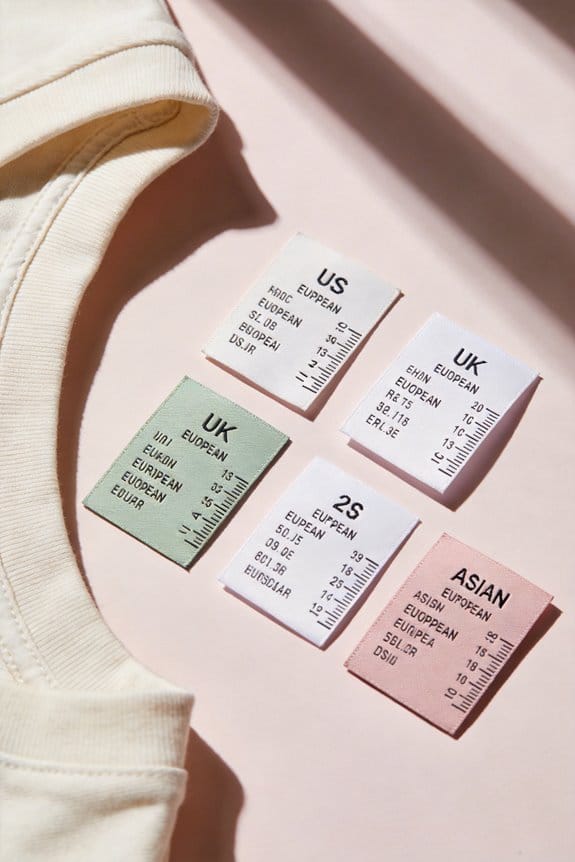

When decoding international size charts, we need to recognize that US, UK, European, and Asian sizes differ markedly. For instance, a US size 8 translates to a UK size 12, while EU sizes are centered around body measurements. It’s essential to measure ourselves accurately, focusing on bust, waist, and hips, to guarantee the right fit. Understanding these differences helps us avoid sizing confusion and enhance our shopping success. Let’s explore more about how to navigate these challenges effectively.
Key Takeaways
- UK sizes differ from US sizes, requiring conversions (e.g., UK 10 = US 6) for accurate online shopping.
- EU sizes are based on body measurements in centimeters, complicating size comparisons with US and UK standards.
- Asian sizes tend to run smaller than US sizes, necessitating careful measurement and conversion for proper fit.
- Accurate self-measuring (bust, waist, hips) is crucial in aligning personal size with international sizing standards.
- Always check brand-specific size charts, as inconsistent sizing and material quality can impact fit and comfort.
Understanding Size Confusion in International Markets
Shopping for clothes online can be such a hassle, especially when it comes to figuring out what size you really need. You might think you’re a certain size, but with different measuring systems around the world, it can get confusing quick. For example, did you know a UK size 10 is actually a US size 6? And it doesn’t stop there; EU sizes are based on body measurements in centimeters, meaning a US size 8 translates to an EU size 40.
If you’re shopping in Asian markets, it can get even trickier. Sizes often run smaller than what you’d expect from US sizing, so packing your patience and possibly sizing up is a smart move.
To navigate these sizing discrepancies, try using conversion charts and pay attention to brand-specific sizes. Want an even better tip? Many brands provide their own size guides, which can save you from those pesky returns.
Honestly, understanding size charts can feel frustrating, but with a little effort, you can shop internationally like a pro. So, how do you feel about diving into that online shopping spree now? Just remember to double-check those sizes! Keep in mind that choosing clothing with certified organic fabrics can provide better comfort and safety, especially for babies and those with sensitive skin.
How Do US, UK, and EU Sizes Differ?
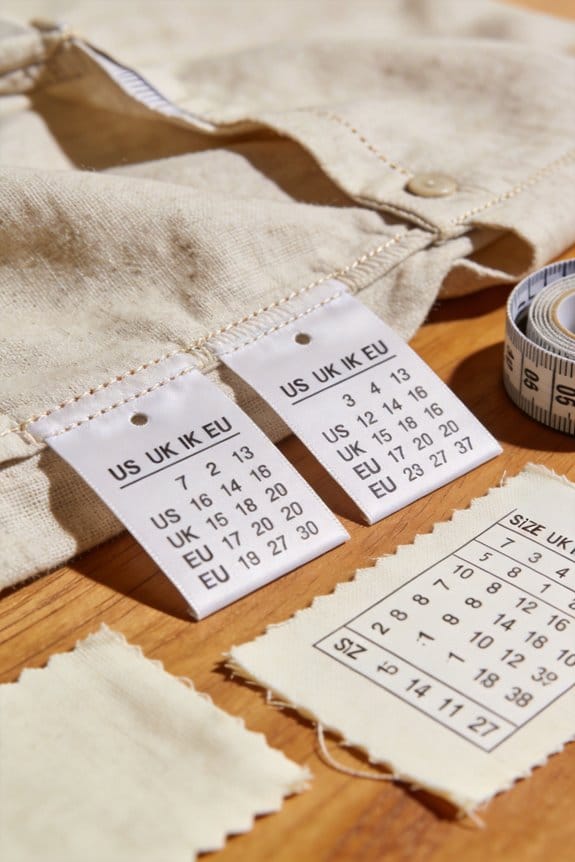
When you’re trying to buy clothes from overseas, it can get super confusing, right? If you’ve ever found yourself puzzled by size labels, you’re not alone. Different countries have their own sizing charts, and they really don’t match up neatly.
Take women’s clothing, for example. A US size 8 is actually a size 12 in the UK and a size 40 in the EU. Why does this matter? It helps to know because ordering something online and getting the wrong size can be a real letdown.
For guys, things are a bit simpler. US and UK sizes are pretty similar since both use chest measurements in inches. However, if you’re chatting EU sizes, just add about 10 to those measurements. It’s a helpful trick to keep in your back pocket.
Here’s another thing to keep in mind: Asian sizes usually run a bit smaller than what you might expect. So definitely check size conversion charts. They’re your best friend when shopping internationally.
And what about shoes? You wouldn’t want to get stuck with ill-fitting footwear, right? A UK women’s size 5 typically equals a US size 7 and an EU size 38. Make sure you pay close attention to these conversions, especially when shopping from a different part of the world.
To sum it up, understanding size differences can save you some serious hassle when shopping abroad. So next time you’re browsing international stores, remember these tips! What’s the first item on your wish list?
For shoppers buying special garments like baby gowns, it’s important to also consider size and fit considerations to ensure comfort and proper wear.
What You Need to Know About Asian Clothing Sizes
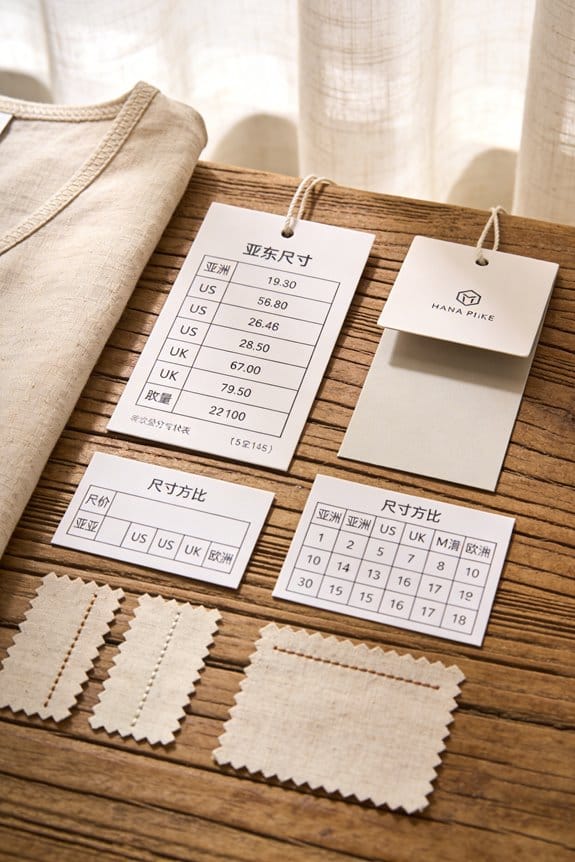
Have you ever found yourself frustrated trying to figure out sizing when shopping for clothes in Asia? It can be a real challenge! Asian clothing sizes tend to run smaller than what you’re used to in the Western world. This means if you’re typically a medium, you might actually need to size up. For example, a medium size often aligns with a bust measurement of 33.5-35 inches.
So, how do you navigate this tricky sizing issue when shopping online? First off, don’t skip the size conversion chart—it’s a must-have tool if you want to avoid fitting nightmares. Keep in mind that children’s sizes in Asia are usually based on age, so take a moment to check the specific measurements before making a purchase.
Pay attention to crucial measurements, like your waist and chest sizes. These details can help you find that perfect fit, no matter your shape. Frankly, it’s all about ensuring the clothes look good on you rather than just relying on the label.
When choosing baby clothes, also consider size and fit guidelines to accommodate growth and ensure comfort.
How to Properly Measure Yourself for Sizing
Finding the right clothing size can be a real hassle, especially when you’re dealing with all sorts of sizing systems out there. You might’ve experienced that moment when clothes don’t fit quite right—frustrating, isn’t it? The good news is that getting accurate measurements can help you navigate this tricky situation.
So, what do you need to do? Start with a flexible measuring tape. It’s key to getting those important body proportions down.
- Bust: Wrap the tape around the fullest part of your bust, making sure it’s level. You don’t want it too tight—just a comfortable hug is perfect.
- Waist: For this one, find your natural waistline, which is usually just above your belly button. Stand relaxed and take the measurement.
- Hips: Measure around the widest part of your hips while standing with your feet together.
And let’s not forget about the inseam. You measure from your inner thigh down to your ankle bone, and if you can, do this while wearing the shoes you plan to pair with the outfit.
Honestly, it can feel like you’re in a maze with different brands’ sizing charts. So, don’t skip checking those brand-specific size charts—they’re essential for making sure you’re comparing apples to apples, especially with international sizing.
Also, paying attention to features like size range availability can make a big difference in ensuring a perfect fit across different brands.
What’s the takeaway here? Getting these measurements right can really save you a lot of time and headaches down the road. Remember to not rush the process. What’s your go-to trick for finding the perfect fit?
Understanding Children’s Clothing Sizes Globally
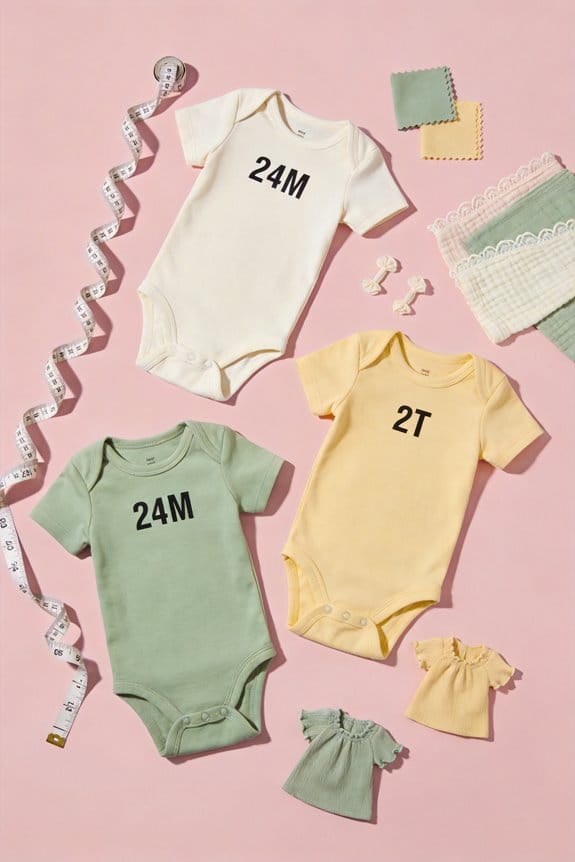
Ever tried to shop for your kid’s clothes only to find that sizes seem more confusing than a math problem? You’re not alone! Navigating children’s clothing sizes from different countries can feel tricky. Here’s the deal: in the US, sizes typically match the kid’s age, while in the UK, they’re based on height or chest measurement. Then, there’s Asian sizing, which often runs smaller. It can make your shopping trip a real headache if you’re not careful.
So, how can you make it easier? Try this: always have a conversion chart handy. Brands usually provide size charts on their websites that detail measurements for each size. This can really help you pick out the right fit. When you know how to compare sizes internationally, you can cut down on frustrating returns and keep your little one happy in their new clothes.
Don’t forget that not all brands size their clothing the same way. It’s worth checking each one you’re interested in. For example, a size “4” in one store might be completely different from a size “4” in another.
Honestly, the key to hassle-free shopping is preparation. Having that size information right in front of you can save a lot of guesswork. Remember that many coordinated sets are designed to be true to size, promoting satisfaction with your purchase. So, next time you’re about to dive into the world of kids’ clothing, remember: understanding sizing differences can make your life a lot easier. Are you ready to tackle children’s clothing sizes like a pro?
Converting Women’s Clothing Sizes
Converting women’s clothing sizes can be a bit of a headache, right? Between US, UK, EU, and Asian sizes, it can feel like you’re deciphering a secret code. To make things easier, having a handy size chart for international sizing can really help.
For example, if you usually wear a US size 8, that translates to a UK size 12 and an EU size 40. Surprising? It often is! And when it comes to Asian sizes, a US medium usually fits more like an Asian large or even extra-large because the size models tend to be smaller.
Here’s the trick: always take your body measurements—think bust, waist, and hips. This way, you can ensure you’re getting the right fit, no matter where you’re shopping from. Why is this so important? Because nothing feels better than finding that perfect outfit that fits like a glove.
Navigating through different clothing sizes doesn’t have to be stressful. With the right size chart and a bit of knowledge about how sizes translate globally, you can shop with confidence and avoid those awkward “this doesn’t fit” moments. Also, remember that size charts help prevent common sizing errors by matching measurements to the correct international standards.
Men’s International Clothing Sizes: Consistencies and Variances
Finding the right fit in men’s clothing can feel overwhelming. Did you know sizes can vary a lot between countries? For instance, while US and UK sizes often align closely, a US size 38 usually translates to a UK size 38 too. But things get tricky when you’re shopping for Asian sizes; they typically run smaller. A size L in Japan can feel more like a US size M.
When you’re looking at trousers, waist size becomes really important. Measurements are generally in inches in the US, but you’ll often find them in centimeters elsewhere. Here’s the trick: before you hit the stores or shop online, take detailed measurements of your neck, chest, and waist. This simple step goes a long way to help you get the perfect fit across all those international sizing systems.
So, why does this matter? Well, nothing feels better than wearing clothes that fit just right. You want to be able to walk into any shop and know what size to grab without second-guessing yourself. Honestly, taking the time to understand these differences will save you from the hassle of returns and exchanges.
In short, measuring yourself before shopping is key. It also helps to consider size and fit options since proper coverage and comfort vary by brand and region. Keep that in mind the next time you shop globally, and you’ll be one step closer to filling your closet with clothes that fit like a dream. What’s your go-to strategy for tackling sizing issues when shopping?
Tips for Avoiding Sizing Confusion When Shopping Internationally
How do you make sense of clothing sizes when shopping from other countries? It can be tricky, but there are some solid strategies to keep your wardrobe looking great without the hassle of returns. First thing’s first: always check the brand-specific size chart for every item you’re considering. Sizing can be all over the place, so taking accurate measurements of your own body is a must. Focus on your bust, waist, hips, and inseam to find your best fit.
For instance, did you know that a US size 8 is equivalent to a UK size 12 and an EU size 40? This can be super helpful when making decisions. But don’t forget to pay attention to individual garment measurements—just because you know your size doesn’t mean every brand will have the same fit. And if you’re eyeing pieces from Asian brands, keep in mind that their sizes tend to run smaller, so it might be wise to size up.
Here’s the trick: online sizing conversion tools can save you a lot of time, but make sure to double-check against those brand-specific charts. The last thing you want is to receive an item that doesn’t fit. So, why does this matter? The more prepared you are, the easier your shopping experience will be.
In recap, take your measurements, consult size charts closely, and remember that sizing can vary widely across brands and regions. Also, considering the material quality and standards can influence how a garment fits and feels, so it’s useful information to review before purchasing. Now, you’re better equipped to shop confidently. Have you ever returned clothing because it just didn’t fit right?
Frequently Asked Questions
What Is the Difference Between Asian and UK Sizes?
Asian sizing standards often run smaller than UK sizing variations, causing shopping challenges. Measurement unit differences heighten international size discrepancies, while cultural fashion trends and brand sizing inconsistencies complicate our clothing fit preferences and online shopping experiences.
Do Asian Sizes Run Smaller Than US Sizes?
Yes, Asian sizes often run smaller than US sizes. When we’re shopping online, it’s essential to take into account fit comparisons, accurate body measurements, and brand variations. Women’s sizing can differ greatly, so always check those sizing charts!
What Is Asian XXL in the US?
Asian XXL typically equates to a US XL or L. However, due to garment fit variations and regional body shapes, we should always check size conversion charts and brand sizing discrepancies for the best fit.
How Do UK Sizes Translate to the US?
UK size conversion often means a size 10 translates to a US size 6. We should remember brand size inconsistencies and clothing fit variations while using online size guides for international shopping tips and measuring techniques differences.