

Choosing baby hats based on head circumference, not age, guarantees better fit and safety. Babies grow at different rates, so a snug fit helps keep them warm without causing discomfort. To measure accurately, wrap a soft tape around the head, above the eyebrows and ears, while using the Two-Finger Rule for a comfortable fit. This method also prevents obstruction of the baby’s view and breathing. If you want to know more about sizing and materials, keep following along.
Key Takeaways
- Head circumference provides a more reliable measurement for hat size than age, accommodating individual growth rates and head shapes.
- Babies have varying head sizes, making age charts prone to mismatches and incorrect fittings.
- A snug hat fit is crucial for warmth, comfort, and preventing safety issues like obstructed vision and breathing difficulties.
- Accurate head measurements prevent red marks on sensitive skin, ensuring the hat hugs the head without unnecessary pressure on soft spots.
- Frequent reassessment of head circumference is essential, especially during growth spurts in a baby’s first year.
Why Head Circumference Is Key for Baby Hat Sizing
Choosing the right size for your baby’s hat can be a bit tricky. Have you ever bought a cute hat only to find it doesn’t fit quite right? That’s where measuring head circumference comes into play. It’s not just about age—babies grow at different paces, and a tape measure is your best friend here.
When you’re looking at hat size charts, remember that a well-fitted hat is more than just a fashion statement. A snug hat helps keep your baby warm and comfy, which is super important. Plus, it can prevent safety issues too, like blocking their vision or making it harder to breathe. Tight hats can leave marks on their sensitive skin, so you’ll want to take accurate measurements to avoid that.
Try this: Use a soft measuring tape and wrap it around your little one’s head, just above the eyebrows and ears. Don’t stretch the tape too tight; you want a comfortable fit.
Honestly, you might be surprised by the size variations even among babies who are the same age. A lot of parents overlook this, only to find that their baby’s new hat either swallows them up or squeezes them too tightly.
In short, measuring head circumference is key for not just a stylish look but also ensuring your baby’s comfort and safety. For optimal comfort, it’s also important to consider breathable materials to prevent overheating and skin irritation.
So, what’s your go-to hat for your little one?
How to Measure Your Baby’s Head Accurately

Have you ever struggled to find the right hat size for your little one? Accurate head measurement can make all the difference for comfort and safety.
To measure your baby’s head, grab a soft, flexible measuring tape or even just a piece of string. Wrap it around the widest part of their head, right above the eyebrows and ears. It should feel snug but not tight. Since babies can be squirmy, it’s a good idea to measure twice just to be sure. Try to pick a calm moment—like while they’re feeding—when they’re less likely to wiggle around.
Once you’ve got that measurement, write down the head circumference in inches. For newborns, sizes generally fall between 13 to 14 inches. After that, remember the Two-Finger Rule: the hat should fit comfortably, allowing you to fit two fingers between the hat and your baby’s head without feeling restrictive.
So, why does this matter? A proper fit not only keeps your baby looking cute but also keeps their little noggin warm and snug. Take your time measuring, and don’t hesitate to try on a few different styles to see what works best for your little one. Honestly, nothing beats a well-fitting hat!
In short, measuring your baby’s head doesn’t have to be a hassle. Just follow these tips, and you’ll be well on your way to finding the perfect hat. What styles are you thinking of trying out?
Remember that adjustable features like expandable shoulders in baby clothes also contribute to comfort, a principle that applies equally to well-fitting hats.
Why You Shouldn’t Rely on Age Alone for Hat Size
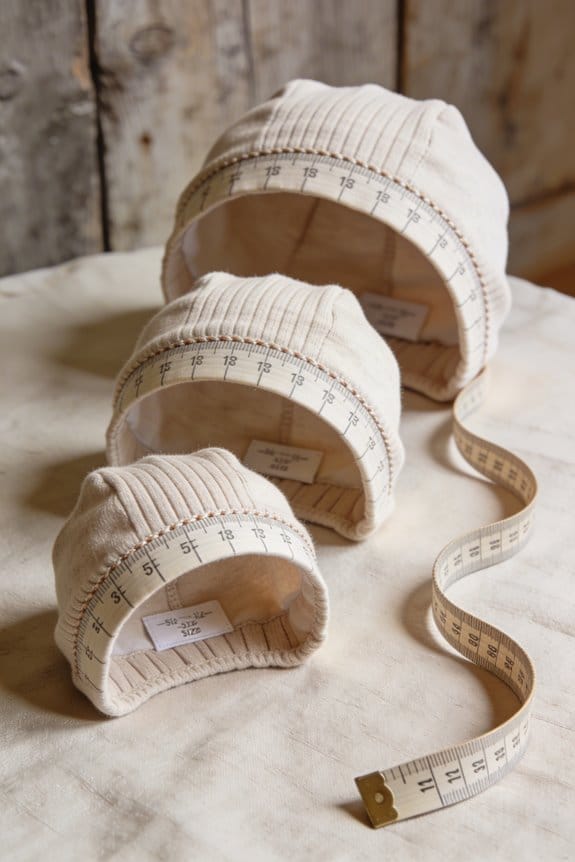
Have you ever bought a hat for your child based on their age, only to find it doesn’t fit right? It’s a common struggle. Many parents rely on age charts, but those can easily lead to mismatched sizes. Kids come in all shapes and sizes, and head sizes can vary widely, even among children of the same age.
Instead of guessing, try this: grab a measuring tape and measure your child’s head circumference directly. It’s a simple step that will help ensure the hat fits just right. An ill-fitting hat can be more than just a minor annoyance; a loose one might obstruct their view or cover their nose, while a tight one could leave nasty red marks on their skin.
Honestly, one of the biggest concerns is that newborns tend to lose heat quickly through their heads. A well-fitted hat is essential for keeping them comfortable and warm. So, why does this matter? A good fit means your little one can enjoy being outdoors without worrying about their hat slipping or pinching.
When shopping for hats, focus on actual measurements rather than just going by age ranges. Selecting items based on size and fit guidelines often leads to better comfort and practicality for your infant. You’ll find that those little extra efforts can make a big difference in your child’s comfort.
Growth Variability in Infant Head Sizes
Have you ever tried to find the perfect hat for your little one, only to find that it just doesn’t fit? It’s a common dilemma, especially since infant head sizes can vary so much. Research shows that newborns typically have head circumferences between 33 to 35 cm. But some babies might have larger or smaller heads depending on a range of factors. By the time they hit age 2, that size can increase to around 47 to 51 cm. Isn’t it fascinating how much growth can happen in such a short time?
This is why getting the right measurements is so important. A well-fitting hat should hug the head snugly without leaving marks or putting pressure on those soft spots on a baby’s head. To ensure warmth and safety, focus more on measuring head circumference rather than just relying on age.
Here are a few quick tips to keep in mind when shopping for hats:
- Measure your baby’s head circumference with a soft measuring tape.
- Try different styles to see which fits best.
- Look for hats with some stretch for added comfort.
Remember, considering material quality is essential for comfort and safety as well.
Honestly, it can feel overwhelming, but don’t stress! Knowing the right size helps you pick out hats that your little one will love to wear. So next time you’re on the hunt for headwear, remember: fit over age is key. After all, what’s more important than keeping our babies warm and cozy?
How the Two-Finger Rule Ensures a Comfortable Fit for Baby Hats
Finding the right fit for baby hats can be a bit of a headache, right? With so many tiny heads and varying sizes, it can feel like a guessing game. Here’s the trick: use the Two-Finger Rule to ensure your baby’s hat is snug but not too tight. Simply place two fingers under the hat’s brim and press gently against the baby’s forehead.
If you struggle to slide your fingers in, it’s a telltale sign the hat might be too tight. That can lead to discomfort and even restrict circulation. On the other hand, if the hat’s too loose, it might slide around, making it tricky for your little one to see.
So, why does this matter? Comfort is key, of course, but safety is a big part of it too. A proper fit helps avoid pressure marks on delicate skin and ensures the hat stays in place even when your baby’s moving around. Choosing breathable materials is also essential to prevent irritation while wearing the hat comfortably throughout the day, much like selecting the right materials for baby booties.
Which Fabrics Affect Baby Hat Comfort and Fit?
What materials should you consider when it comes to choosing a baby hat? It’s crucial to pick fabrics that blend comfort with a great fit. Organic cotton and bamboo are excellent choices, as they stretch to create that snug fit you need, adjusting as your little one grows.
Breathable materials are super important too. They allow heat to escape, helping to keep your baby from overheating. It’s also vital to choose soft, flexible fabrics that won’t irritate delicate skin. Nobody wants a cranky baby because of a scratchy hat, right?
Don’t underestimate the weight of the fabric either. Lighter options can offer sun protection during those bright summer days, while thicker ones keep your baby warm in the colder months. And here’s the trick: steer clear of hats with rigid parts. They can restrict movement and cause discomfort, which isn’t helpful when you want your baby to be free to explore.
Additionally, selecting fabrics that are certified, like those with OEKO-TEX Standard 100 certification, ensures safety and quality for your baby’s sensitive skin.
Safety Tips When Choosing Baby Hats
Choosing the right baby hat can feel a bit overwhelming, can’t it? You want something that looks cute but also keeps your little one safe and comfy. First off, make sure the hat fits snugly but not too tight—enough that you can slide two fingers underneath without cutting off circulation. It’s super important that the hat doesn’t cover your baby’s eyes, nose, or mouth, as that can lead to serious breathing issues.
Let’s talk about safety a bit more. Hats with loose decorations or long cords? Those are a big no-no. They can pose choking hazards that you definitely want to avoid. And during sleep, especially in car seats or indoors, it’s best to remove the hat. Removing it will help keep your baby from overheating, which is a big concern for many parents.
When you’re thinking about materials, go for options like organic cotton or bamboo. They’re soft, stretchy, and comfy, which means they’ll grow with your little one while keeping safety a priority. Indeed, when you find the right hat, it makes outings a lot easier. Choosing fabrics that are hypoallergenic and breathable can help keep your baby comfortable and safe from irritation.
When to Reassess Your Baby Hat Sizing
When was the last time you checked your baby’s hat size? It might surprise you to learn that you need to reassess it every few months, especially during those rapid growth spurts in their first year. Measuring your little one’s head circumference regularly is key to making sure their hat fits just right. A snug fit is important to avoid discomfort and even issues like obstructed vision.
Notice that a hat that used to fit well is now too tight or leaving red marks? It’s time to grab that measuring tape and see if you need to size up. Also, don’t forget that as the seasons change, your baby’s hat size might need a bit of adjusting too, not just because of growth but also for style.
Make sure to check updated size charts based on head circumference since babies of the same age can wear very different sizes. Being proactive about sizing can really keep your little one safe and comfortable. So, how often do you think you’ll check? It’s worth it to avoid any fuss during those chilly months! Remember that choosing hats made from soft warm materials designed for infants helps maintain comfort and protection against the cold.
Frequently Asked Questions
Why Is Baby Head Circumference Measured?
We measure baby head circumference to assess growth patterns, guarantee proper fitting hats, and monitor developmental milestones. It helps us identify proportion trends and hair growth, ultimately supporting our little ones’ health assessments and comfort.
At What Age Do We Stop Checking Head Circumference?
We typically stop checking head circumference around age three, as head growth stabilizes. Isn’t it fascinating how measuring techniques serve as health indicators? After that, we focus more on overall developmental milestones and age variations.
How Does Hat Size Relate to Head Circumference?
Hat size directly relates to head circumference; proper measurement techniques guarantee a well-fitted hat that accommodates our baby’s growth. Common misconceptions often overlook this, so we should always refer to the size chart for accuracy.
At What Age Do the Head Circumference and Chest Circumference Become Equal?
At around 2 to 3 years, head circumference and chest circumference typically equalize. As we track our babies’ growth, we should remember the importance of these changes in sizing standards for proper fitting and healthy development.