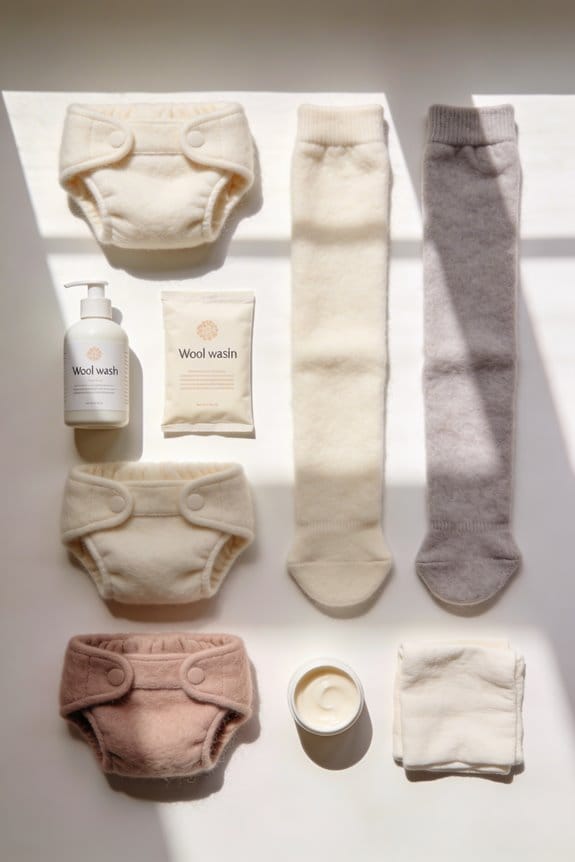

To care for wool diapers and longies, we need gentle wool wash, lanolin, and a sink of lukewarm water. Start by rinsing the covers in cool water, then soak them in a wool wash solution for about 15-20 minutes. After washing, we’ll lanolize by mixing lanolin with hot water and soaking the clean covers for at least 30 minutes. This routine keeps them effective and odor-free. Let’s explore more tips to keep our wool items in top shape.
Key Takeaways
- Rinse wool covers in cool water before washing to remove any dirt and fabric contaminants.
- Use lukewarm water mixed with a gentle wool wash for soaking wool diaper covers.
- Mix solid lanolin with hot water and a few drops of wool wash for effective lanolizing.
- Aim to lanolize wool covers every 2-3 weeks to maintain waterproof quality and prevent leaks.
- Store clean, dried wool items in breathable containers, avoiding direct sunlight and overcrowding.
What You Need for Washing and Lanolizing Wool Diapers
When you’ve got wool diapers, washing and lanolizing them can seem overwhelming at first. It’s important to keep them in good shape so they can keep your little one dry and comfy. So, what do you really need?
Start by gathering your supplies: a reliable wool wash or gentle baby soap, liquid or solid lanolin, and a small jar for mixing. It’s also a good idea to have a sink or small tub filled with lukewarm water for soaking. Remember, turning the covers inside out makes a difference. Let them soak for about 15-20 minutes.
While the diapers are soaking, melt your lanolin in some hot water. Mix in a drop of the wool wash, and you’re almost there. Once your covers have soaked long enough, gently squeeze out the excess water—just don’t wring them out, as that can ruin the fibers. Rolling them in a towel helps absorb any remaining moisture.
Regular maintenance is crucial too. Depending on how often you use them, plan to lanolize every 2-3 weeks. So, why does this matter? Well, keeping up with this routine will help ensure your wool diapers stay effective and last longer.
To sum it up, keeping your wool diapers clean and lanolized is totally manageable with the right steps. Using gentle detergents formulated for sensitive skin will help maintain the fabric’s quality and baby’s comfort. Have you tried washing and lanolizing your wool diapers yet?
Recommended Products

A warm, airy cream base dominates the field, with soft beige and tan tones filling the intricate floral scrollwork and border. Muted gray accents trace the vine and leaf details, giving the palette a gentle, washed quality that feels both classic and quietly understated.

WASHING GUIDE: For 8' x 10' we recommend a 100lb (13.5cu ft) commercial washing machine. Please call your local laundromat ahead of time to determine if the right washer size is available. When it's time for a deeper clean, machine wash your rug with like colors on delicate with 1 TBSP of gentle detergent. Preferably line dry. Alternatively, tumble dry on no or low heat setting.

A soft, muted palette of cool gray and warm cream dominates the surface, with gentle accents of tan and dusty light blue woven through the floral motifs — the overall effect is a beautifully faded, antique-washed neutral that feels calm and sophisticated.
Step-By-Step Guide to Washing Your Wool Covers

Keeping your wool covers in tip-top shape isn’t just about looking after your investment; it’s about making sure they do their job well. So, what’s the best way to wash them? Let’s break it down.
First off, you’ll want to rinse those wool covers in cool water. Make sure to turn them inside out; that way, you can effectively remove any leftover urine. It’s a simple step, but trust me, it makes a difference!
Next, pull out your sink (or a basin) and fill it with lukewarm water. Add a small amount of wool wash there. You’re going to let your wool covers soak for 15 to 20 minutes. During this time, consider catching up on your favorite podcast or having a little quiet time—do whatever helps you unwind a bit.
Now comes the fun part: mixing up a lanolin solution. Here’s the trick: take about 1 teaspoon of solid lanolin and dissolve it in hot water, mixing in a few drops of your wool wash. Once that’s ready, submerge your wool covers in the mixture and let them soak for at least 30 minutes. Think about all that lovely conditioning happening!
After soaking, gently squeeze out the excess water without twisting—this helps maintain the fabric’s integrity. Then, you’re going to lay your covers flat on a towel to dry. It’s key to help keep those waterproof properties intact.
Using lanolin not only softens but also enhances the natural water-resistant qualities of wool, making it ideal for diaper covers.
Recommended Products

Lanolin Woolwax auto / truck undercoat BLACK

No strong odor. Non Drip Formula

Highly effective at removing grease and dirt
Properly Lanolize Your Wool Diapers

Properly lanolizing your wool diapers is crucial if you want them to stay waterproof and do their job well. So, how do you get it right? Start by mixing about 1 teaspoon of solid lanolin or a capful of liquid lanolin with a few drops of wool wash in hot water until it looks cloudy. Once you’ve got that solution ready, soak your clean wool covers for at least 30 minutes, making sure they’re fully submerged.
After soaking, gently squeeze out any extra water—don’t wring them out, as that can damage the fibers. Lay the covers flat to air dry and keep them away from any direct heat sources. It’s also smart to keep an eye out for any signs of leakage or odor; these are good indicators that it’s time to lanolize again. Generally, you’ll want to do this every 2 to 3 weeks to keep things running smoothly.
Frankly, a little effort goes a long way in extending the life of your wool diapers. Keeping them in top condition not only saves you money but also ensures your little one stays comfy. So, give it a try! What have you found most helpful in caring for your wool diapers? Using breathable fabrics in your wool covers complements lanolizing by enhancing comfort during wear.
Recommended Products

Soothes & Moisturizes - Protect cuts, scrapes, minor burns, and chafed, cracked, or denuded skin. This protectant body cream boasts a high-lanolin formula that aids recovery by maintaining hydration.

Nice for handwashing or machine

Nice for handwashing or machine
What Mistakes Should You Avoid When Caring for Wool?
Caring for wool can feel like a bit of a puzzle sometimes, right? One wrong move and you could be left with shrunken, felted items that aren’t quite what you paid for. To keep your beloved wool pieces in great shape, here are some key tips to avoid common pitfalls.
First things first, when washing wool diaper covers, you’ll want to stick to lukewarm or warm water. Hot water is a no-go because it can lead to shrinkage and felting, which I’m sure you don’t want. Instead of wringing out your items, try gently squeezing the water out or rolling them in a towel—this helps maintain their shape.
And don’t even think about using harsh detergents! Products like Woolite can strip away the wool’s natural properties, which is counterproductive. You’re better off looking for gentle soaps specifically made for wool, ensuring that the fibers stay healthy and functional.
When it comes to preventing leaks and odors, never forget about lanolizing your wool. Aim to do this every 2 to 3 weeks. It sounds like a hassle, but it’s totally worth it. Plus, it keeps your wool in working order.
Before you wash anything, take a moment to check the care labels. Washing your wool correctly can save you a lot of heartache down the line. Throwing something in the machine without a second thought could lead to regret!
Also, using gentle detergents designed to preserve fabric integrity is crucial for maintaining the softness and durability of your wool items.
Revitalize Wool Covers After Use
When it comes to taking care of wool covers after you’ve used them, it can feel a bit daunting. Do we really need to wash them all the time? Honestly, frequent washing isn’t always needed. You should only wash your wool covers when they’re visibly soiled or have a smell of urine.
Here’s the trick: just air-dry them gently! This can help eliminate any odors while keeping the natural properties of the wool intact. If you do decide it’s time for a wash, make sure to use a wool-safe soap and lukewarm water. Soak the covers for about 15-20 minutes before rinsing them out. Simple, right?
Now, after washing, don’t forget to lanolize those wool covers every 2 to 3 weeks. This step is key for maintaining their waterproof qualities. If you’re not sure how to do that, just mix up some lanolin, and you’ll be good to go. It’s all about replenishing that protective barrier!
So, what do you do if you start noticing leaks? It could mean you need to lanolize again to boost their moisture resistance. Keeping your covers effective is important, and a little extra care goes a long way.
For the best results, remember that breathable fabrics help regulate moisture and comfort during use.
Recommended Products

Personalized knitted diaper cover with your baby name or other word (maximum 6 symbols)!


Nice for handwashing or machine
Tips for Drying and Storing Your Wool Items
Taking care of your wool items can seem tricky, but it’s all about how you handle them. When it’s time to dry your wool, remember to lay it flat instead of hanging it up. Avoid direct sunlight and hot surfaces to prevent the dreaded shrinkage that can ruin your favorite pieces. While it’s drying, gently reshape your wool to its original size, and make sure there’s enough air circulation around it.
Now, let’s get into storage. You’ll want to store your clean, thoroughly dried wool in airtight containers if you’re keeping them for a short time. For longer-term storage, breathable cotton bags with some cedar or lavender work wonders as natural pest deterrents. So, why does this matter? It’s simple: keeping pests away helps your wool last longer.
Also, resist the urge to stuff your wool items together. Give them some room to breathe and maintain their shape. Regularly airing them out between uses can also help minimize odors, which means you can stretch the time between washes. Frankly, who wants to wash their wool all the time, right?
In short, treating your wool properly during drying and storage makes a big difference. Have you tried any of these tips before, or do you have your own wool care secrets to share? Choosing breathable fabrics is also important to avoid irritation and maintain fabric quality.
Recommended Products
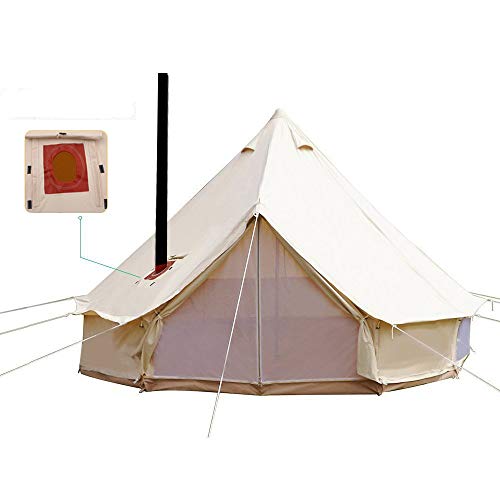
Our bell tent comes with a hole(Red is as picture shown)for chimney pipe and are capable to equip with stove inside. The hole can be covered by cotton when you don't use it. So it achieve both ideal of "beauty and practicality". This winter tent with stove pipe vent is 4-season yurts tent in fact.

Size: Bell tent diameter 5m, the top height of 300 cm, side wall height of 60 cm, door high of 150CMcm. It is a polygonal base, (can place 3 Queen size bed, or 2Queen size bed with 2 single size bed), weight of 36kg. Easy setup in only a 15-30 minutes.

FINALLY, A PLASTIC-FREE CRIB MATTRESS - Many mainstream crib mattresses are glorified plastic - research shows that many emit Volatile Organic Compounds that are harmful to babies. Our organic crib mattress is here to change that
FAQs About Washing and Lanolizing Wool Diapers
How do you keep your wool diapers effective and long-lasting? It starts with lanolizing them before the first use and then every 2 to 3 weeks after that. This step is crucial for maintaining their waterproof quality, which keeps your baby comfortable. Honestly, if you want to avoid leaks, this is a must-do.
When it comes time to wash those covers and soakers, don’t jump the gun. Wash them only if they’re visibly soiled or starting to have an odor. Use cool or lukewarm water mixed with a wool-safe baby wash, as this will help prevent shrinkage and felting—nobody wants that! After a gentle wash, press out any excess water without wringing. Laying the wool flat to air dry is the best practice.
By the way, airing out your wool garments regularly can work wonders. It reduces odors and puts off the need to wash as frequently. So, why does this matter? Keeping your wool in great shape not only saves you time but also money in the long run. Choosing soft and safe fabrics is essential to protect your baby’s sensitive skin during care.
To recap, keep up with the lanolizing and wash only when necessary. Have you tried airing out your wool items instead of washing them all the time? That little tweak might just save your sanity!
Frequently Asked Questions
How to Wash and Lanolize Wool Diaper Covers?
How do we care for our wool diaper covers effectively? We must choose the right wool types, use gentle washing techniques, adhere to temperature guidelines, and apply lanolin properly, ensuring ideal drying methods for longevity.
How Often Should I Lanolize Wool Diaper Covers?
We should lanolize our wool diaper covers every 2 to 3 weeks, as this boosts waterproofing, extends lifespan, aids fabric maintenance, and aligns with washing frequency. Essential oils can enhance freshness while helping with stain removal too!
Do Wool Diaper Covers Work?
When it comes to wool diaper covers, we’ve hit the jackpot! Their moisture wicking properties, breathability advantages, and cost-effectiveness, combined with sustainability factors, guarantee they offer exceptional temperature regulation and odor resistance, fitting our needs perfectly.
How Long to Soak Wool in Lanolin?
We should soak wool in lanolin for at least 30 minutes, but overnight is best for maximizing those wool fiber properties. Proper washing techniques and drying methods preserve natural oils, ensuring effective fabric maintenance.