
We should wash new baby clothes before our little ones wear them to remove harmful chemicals and germs. These garments often contain irritants that can affect a baby’s sensitive skin. A gentle, hypoallergenic detergent can help eliminate these irritants. Additionally, washing gets rid of dust and bacteria from shipping. By taking this simple step, we make sure our babies are comfortable and safe in their new outfits, and there’s more to discover about caring for baby clothes.
Key Takeaways
- New baby clothes may contain harmful chemicals and irritants that can affect a baby’s sensitive skin.
- Washing removes dust, bacteria, and dirt that may have accumulated during shipping and handling.
- A gentle detergent helps eliminate chemical residues, minimizing the risk of skin rashes.
- An extra rinse cycle ensures any leftover detergent is completely washed out for added safety.
- Eco-friendly garments and hypoallergenic materials further reduce exposure to irritants and enhance comfort.
The Hidden Dangers: Chemicals and Germs in New Baby Clothes
When you bring home new baby clothes, have you ever thought about what’s actually in them? It’s surprising how many hidden dangers can be lurking. A lot of these adorable outfits contain chemicals like formaldehyde, which is often used to keep clothes wrinkle-free. This can be a problem for your little one’s sensitive skin. Plus, residues from dyes and surfactants can lead to annoying rashes that no parent wants to deal with.
Consider this—new clothes are often transported in less-than-clean conditions. This means they can pick up germs and dirt along the way, raising the chance of your baby being exposed to harmful bacteria. So, what can you do about it? Try washing your baby’s clothes before you dress them. It’s a simple step that goes a long way in keeping your baby safe.
You’ll want to use a gentle, baby-safe laundry detergent. This ensures that when your baby finally wears those cute outfits, it’s a safer experience overall. Honestly, taking this small precaution shows just how much you care about your child’s health and well-being. Choosing garments with eco-friendly certifications can further reduce exposure to harmful chemicals.
Why Washing Baby Clothes Matters for Your Infant’s Health

Washing baby clothes is more than just a chore; it’s about keeping our little ones safe and comfortable. New clothes can sometimes carry harsh chemicals from the manufacturing process that might irritate your baby’s sensitive skin. By washing them with a gentle detergent, you’ll help remove those irritants and reduce the risk of skin rashes or allergies.
But there’s more! When you wash these clothes, you’re also getting rid of dust and bacteria that might have gathered during shipping. Not to mention, giving those outfits an extra rinse cycle is key for ensuring all detergent and residues are fully washed away.
So, why does this matter? It’s all about giving your baby the softest fabrics that feel great against their skin. Wouldn’t you want that comfort for your little one?
Here’s the trick: choose a detergent that’s specifically designed for babies. And don’t forget to double-check labels for any potentially irritating ingredients. It’s a small step that can make a big difference in your infant’s health.
In the end, taking the time to wash baby clothes properly means you’ll have peace of mind knowing your child is wrapped in clean, safe fabric. Choosing organic baby clothes can further reduce exposure to harmful chemicals for sensitive skin, adding another layer of protection with organic certifications.
How do you make laundry day easier for your family?
Choosing Safe Detergents for Baby Clothes
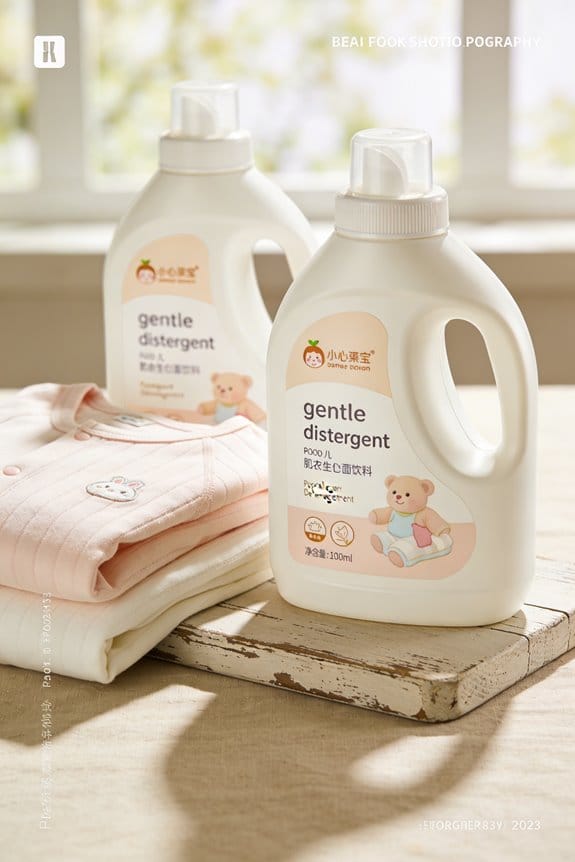
Choosing the right detergent for your baby’s clothes can feel a bit overwhelming. You want to make sure they’re safe, comfortable, and free from irritants. Instead of reaching for any detergent, look for ones marked as “hypoallergenic.” These gentle options help minimize irritation on their delicate skin, which is super important.
Products like “all® free clear” come highly recommended. They’ve been dermatologically tested and tackle stains without the harsh chemicals that can cause skin reactions. Washing baby clothes with a gentle detergent like this means you’re reducing the risk of any potential skin irritation from chemical residues hanging around on their fabrics. Honestly, that peace of mind is priceless.
What you really need to steer clear of are fabric softeners and those traditional detergents that often include allergens and other irritating ingredients. Always take a quick glance at the packaging for certifications that confirm it’s safe for your little one’s skin. It’s a simple step that can go a long way.
Here’s a quick checklist to help you choose the right detergent:
- Look for ‘hypoallergenic’ on the label.
- Check for dermatologist testing.
- Avoid products with heavy fragrances.
- Double-check for safety certifications.
So, why does this matter? Washing before you wear is key for baby clothes. A quick wash helps eliminate any harsh residues and ensures that everything is fresh for your baby’s sensitive skin. It is especially important when caring for organic cotton fabrics used in many baby clothes to maintain their softness and safety.
Step-by-Step Guide to Washing Baby Clothes
Washing baby clothes the right way is super important. You want to make sure they’re not just clean, but also safe and soft against your baby’s sensitive skin. Have you ever thought about how many chemicals might be in regular detergent? That’s why you should start by checking the care labels for any specific washing instructions.
When you’re ready to wash, go for cold or cool water. Setting your washer to a gentle cycle is key for those brand new outfits. Picking the right detergent is also crucial. Try using a hypoallergenic one; it’s better for protecting your baby’s delicate skin.
After the wash, add an extra rinse cycle. It’s a simple trick that helps remove any leftover detergent. Why does this matter? Because it guarantees all potential irritants are thoroughly eliminated.
Keeping the quality of those adorable fabrics top-notch matters, too. By following these steps, you create a soft and safe environment for your baby. It’s also important to avoid harsh detergents to maintain the fabric’s integrity.
So, next time you wash, take a moment to think about what you’re using. You want the best for your little one, don’t you? For peace of mind, choosing clothes with organic material certification can further ensure safety and comfort.
Preparing Baby Clothes: Sorting for a Safe Wash
Preparing baby clothes for their first wash can feel a bit overwhelming. You want to make sure everything’s clean and safe, right? Start by sorting those little outfits by color. It’s a simple step that keeps dye from bleeding onto the whites. Plus, separating new clothes from hand-me-downs is a must to tackle any hidden germs.
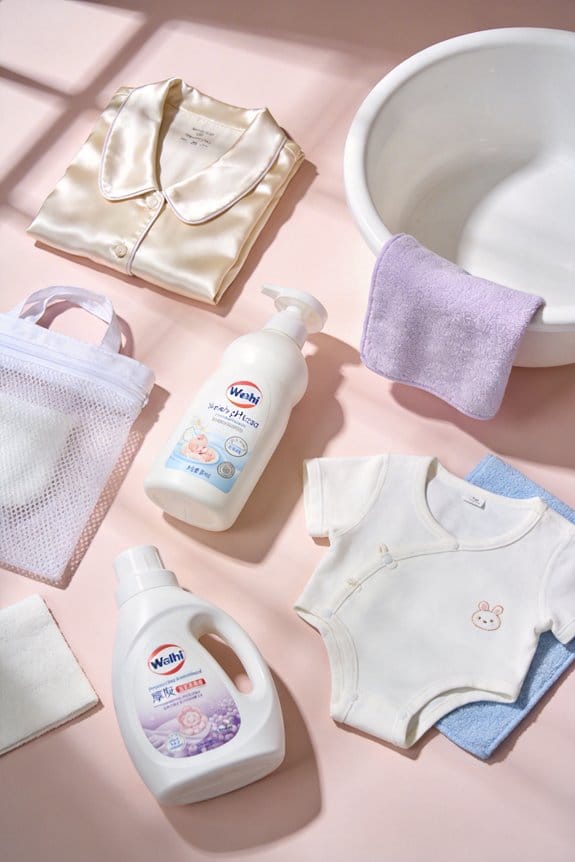
Next, think about the level of soiling. Heavily stained items might need a little pre-treatment before you toss them in the wash. For those tiny socks and bibs, a mesh laundry bag is a lifesaver. It keeps everything together, so you don’t lose a single sock in the process.
Don’t forget to secure any fasteners like buttons and zippers. You want to protect those sweet little clothes and help them last for many washes to come. So, why do all this extra work? It’s all about your baby’s safety and comfort right from the start.
Honestly, a little prep goes a long way when it comes to laundry. It might feel like a lot at first, but you’ve got this. What are your go-to laundry tips for baby clothes?
Be sure to follow the care instructions specific to baby clothes fabrics to maintain softness and durability.
How to Dry and Store Baby Clothes Safely?
Ever wondered how to keep your baby clothes soft and safe? After washing them, drying and storing them properly is just as crucial.
When it comes to drying baby clothes, you’ll want to be gentle. If you’re using a dryer, choose the low heat setting. Air-drying can be a great alternative too! It maintains that lovely softness and helps prevent any pesky shrinkage that can happen with baby clothes. Remember to skip the fabric softeners. They can cause skin irritations and might even reduce how absorbent those cute little onesies are.
Storing baby clothes? Let’s keep it organized and safe. One smart tip is to use vacuum storage bags for clothes that your baby has outgrown or for seasonal items. These bags not only save space but they protect against dust and moisture. You can also arrange clothes in a dedicated closet by size and color for easy access. It really makes life simpler when everything has its own spot.
Don’t forget to check your stored clothes regularly for stains or damage. You want to ensure they’re in the best condition for the next little one. Keeping your baby’s clothes clean and organized is definitely worth the effort. Additionally, choosing hypoallergenic materials when selecting baby clothes can help prevent irritation and ensure comfort.
Frequently Asked Questions
Do Baby Clothes Have to Be Washed Before Wearing?
Yes, we should wash baby clothes before wearing. It’ll help remove chemical residues, prevent skin allergies, and guarantee safety. Using gentle detergent, avoiding fabric softeners, and following proper washing tips makes for a better laundry routine.
What Happens if You Don’t Wash New Clothes Before Wearing Them?
If we don’t wash new clothes first, we run the risk of chemical residue, skin irritation, and allergic reactions. Factory contaminants, irritant exposure, and even color bleeding can lead to hygiene concerns and laundry allergies.
Do You Need to Wash Baby Clothes When You Buy Them?
Absolutely, we should wash baby clothes when we buy them. Those garments are like little sponges, soaked with fabric chemicals and allergenic materials. Using gentle laundry detergents guarantees our baby’s delicate skin stays cozy and irritation-free.
Do You Have to Wash Baby Clothes Before Wearing Reddit?
Yes, we believe washing baby clothes before wearing is essential. Choosing the right detergent and using safe washing techniques helps remove chemical residues, ensuring fabric safety for delicate baby skin, and minimizes the risk of allergic reactions.