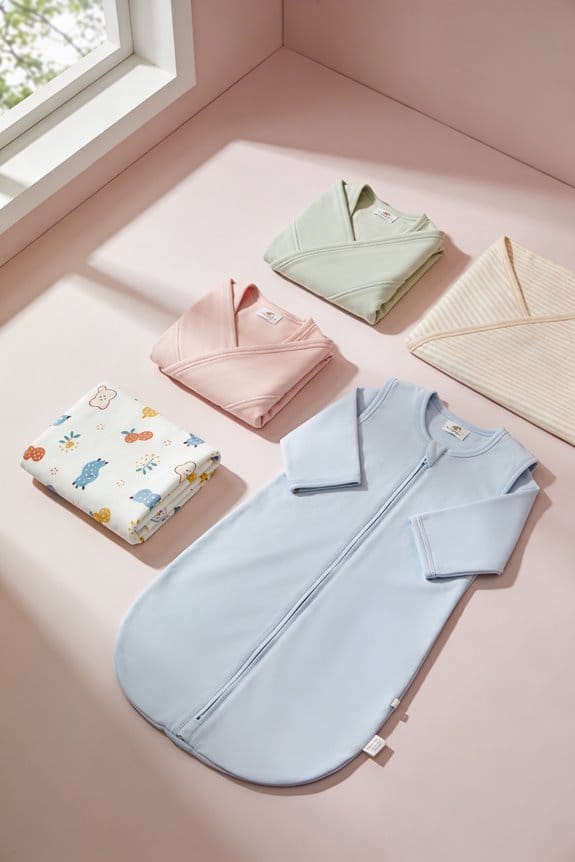

As parents, we should look for signs that our baby is ready to shift from swaddling to a sleep sack, typically around 3-4 months. Indicators include rolling over, increased fussiness during sleep, and the Moro reflex fading. To guarantee safety, it’s essential to stop swaddling once your baby begins rolling. Introducing a sleep sack provides freedom of movement while maintaining a secure sleep environment. Understanding this process can help us navigate the shift smoothly and effectively.
Key Takeaways
- Signs of readiness for a sleep sack typically appear around 3-4 months, such as rolling over during tummy time.
- Increased restlessness or fussiness during sleep may indicate discomfort with continued swaddling.
- The Moro reflex begins to fade between 4-6 months, suggesting less need for swaddling.
- Rolling over while swaddled increases suffocation risks, making the transition crucial for safety.
- Gradually introducing the sleep sack during naps can ease the transition process.
Signs Your Baby Is Ready to Stop Swaddling
How can you tell if your baby is ready to stop swaddling? This can feel like a tough call, but you’ll usually notice signs popping up around the 3-4 month mark. When babies start rolling over or pushing up with their arms during tummy time, that’s often a big indicator.
Keep an eye out for increased restlessness or fussiness during sleep; if your little one seems uncomfortable, it might be time to let them stretch out a bit. It’s also a good sign when they start lifting their head and shoulders without the swaddle or try rolling from back to tummy.
Truth is, the Moro reflex tends to fade between 4 and 6 months, making swaddling less critical as they grow. If you catch your baby rolling over or breaking out of the swaddle, it’s definitely a clue that they’re ready for something new. Transitioning to a sleep sack or letting them sleep with their arms out can provide the safety and comfort they need.
It’s important to recognize multi-stage swaddle designs that support a gradual transition from fully swaddled to arms-free sleep, helping both baby and parents adjust comfortably.
Understanding Risks of Extended Swaddling
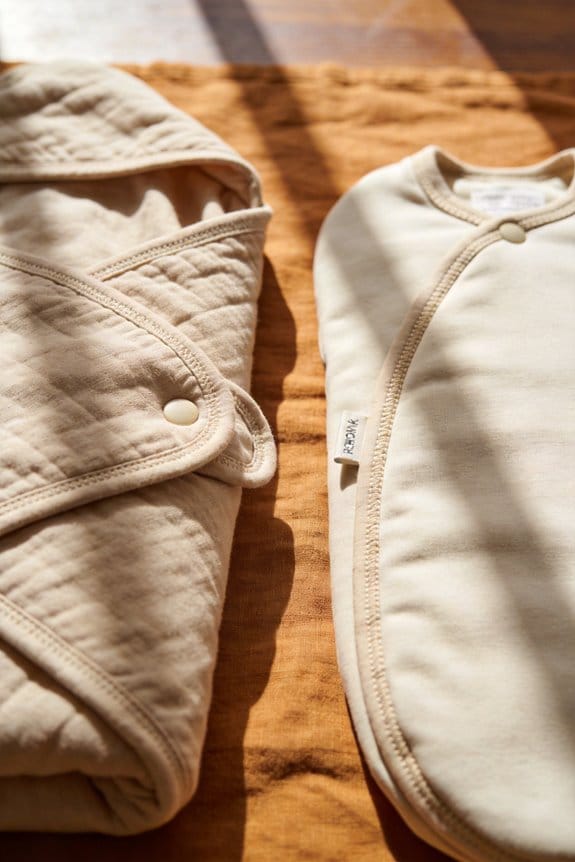
Swaddling can feel like a cozy blanket of comfort for your baby, but have you considered the risks when it goes on a bit too long? The American Academy of Pediatrics suggests that once your little one starts showing signs of rolling—usually around 3 to 4 months—it’s time to phase out the swaddle. Continuing to swaddle after they begin rolling can put them in a face-down position, which raises the chances of suffocation and Sudden Infant Death Syndrome (SIDS).
There’s also the concern of tight swaddling affecting hip development and possibly leading to hip dysplasia. You might notice signs that it’s time to switch things up, like if your baby gets fussier at sleep time, pulls away from the swaddle, or if their startle reflex seems to fade.
Try this: consider transitioning to a sleep sack for a safer sleep environment. They’re a great way to keep your baby snug without the risks of swaddling.
Honestly, being aware of these signs makes a big difference. Your baby is growing, and adjusting to their needs is part of parenthood. So remember, listening to their cues can help you both sleep a little better. What are some changes you’ve made to help your baby sleep safely?
Using sleepwear designed with breathability and moisture control in mind can also promote safer and more comfortable sleep for your baby.
When to Stop Swaddling and Start Using a Sleep Sack?
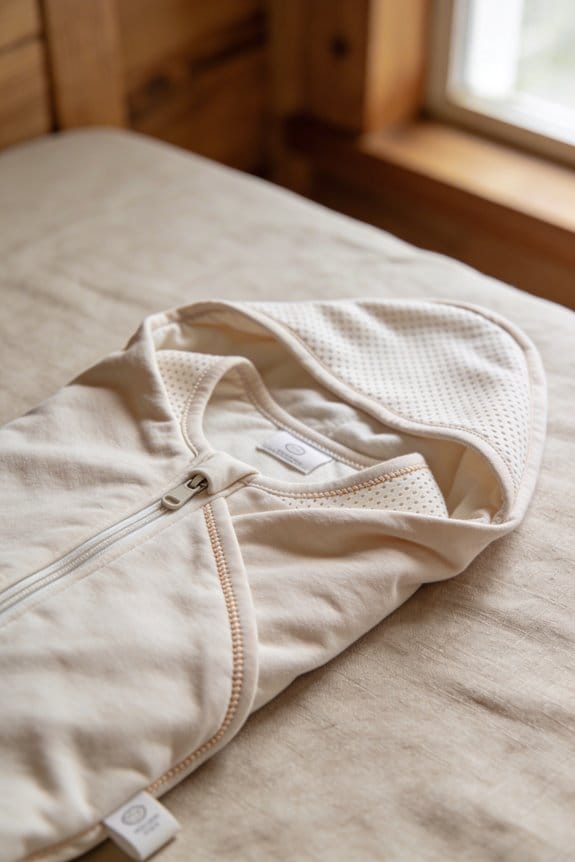
When should you stop swaddling and make the switch to a sleep sack? It’s a question many parents grapple with, especially around the three to four-month mark. If your little one is starting to show signs of rolling, that’s a big indicator. You might see them trying to lift their head and shoulders during playtime. If that’s happening, it’s likely time to transition.
Increased fussiness or your baby resisting being swaddled are other signs they’re ready for a change. They need more freedom in their sleep space. Sleep sacks do a great job of allowing movement while keeping them safe. Plus, they can help with that pesky startle reflex that can wake your baby up.
Try this: Pay attention to their sleeping patterns after you make the switch. You want to ensure your baby remains comfortable and sleeps well as they adapt to this new phase. So, why does this matter? It’s all about keeping your baby safe while still providing the comfort they need for better sleep.
Choosing sleep sacks made from breathable materials can help regulate your baby’s body temperature and prevent overheating during this transition.
Wrapping things up, the right time to switch can look a little different for every baby. Just keep an eye on those signs, and trust your instincts. Have you noticed any hints from your little one that they might be ready for a sleep sack?
Step-By-Step Guide to Transitioning From Swaddle to Sleep Sack
Are you stressed about how to move your baby from a swaddle to a sleep sack? It can feel overwhelming, especially when your little one starts rolling over around three to four months. You want to make sure they’re safe and comfortable through this transition.
Start by introducing the sleep sack during nap times before using it for bedtime. This gentle approach allows your baby to get used to the new feeling without the added pressure of nighttime sleep. Keep the swaddle handy, but try using a sleep sack for naps so they can gradually adjust.
Here’s a trick: if your baby seems to resist the sleep sack at first, use a swaddle during the night while letting their arms out. This way, they can still feel snug while getting used to the idea of being a little more free.
So, why is this change important? Well, it’s essential for your baby to learn to self-soothe and sleep safely as they grow. Sleep sacks promote those skills and keep them cozy without the risk of overheating or getting tangled in extra fabric.
The best part is that sleep sacks come in various sizes and materials, so you can choose one that fits your climate and child’s needs. If the fabric feels soft and comfortable, your baby will likely embrace it much faster.
Truth is, transitioning from a swaddle to a sleep sack doesn’t have to be stressful. Just take it slow, and trust that your little one will adapt in time. You’ve got this! How did you handle transitions like this with your baby?
For this transition, choosing a sleep sack with a suitable TOG rating can help maintain your baby’s comfort during warm weather.
Effective Strategies for Gradual Transitioning Away From Swaddling
Making the switch from swaddling can feel like a daunting task. Many parents wonder how to help their little ones adjust without causing too much disruption. The good news is, there are simple steps you can take to ease the transition for both you and your baby.
Start with a gradual approach. Try swaddling your baby with one arm out for a week or two. This lets them experience some freedom of movement while still feeling secure, which can make a big difference. Swap which arm is free each night to help them get used to the change. It helps them adapt without completely upsetting their routine.
Once both arms are out of the swaddle, consider using a sleep sack. It’s a great option since it allows safe movement while keeping your baby warm and cozy. Have you thought about keeping a consistent bedtime routine? Maintaining familiar bedtime habits can offer them comfort, especially if they’re a bit restless during this transition.
Now, here’s the tricky part—pay attention to when your baby starts showing signs of rolling. When that happens, it’s time to shift gears for their safety and overall development. Choosing sleep sacks with adjustable features can help accommodate your baby’s growth and sleeping preferences during this stage.
Benefits of Sleep Sacks Over Swaddling
Making the switch from swaddling to sleep sacks might seem daunting, but it can really open up a whole new world for your baby’s sleep. Sleep sacks offer the freedom for your little one to move their arms and legs comfortably, and that’s great for their development. Plus, they encourage those important self-soothing skills that can help everyone get a better night’s sleep.
Have you ever worried about safety when your baby starts to roll? Sleep sacks are designed with that in mind. They fit securely without constricting, which means less risk compared to traditional swaddles. The best part? Sleep sacks are better for hip health since they let little legs move naturally. There’s also a variety of TOG ratings available, which makes it easy to pick the right thickness for whatever the temperature is like.
So, why does this matter? Switching to sleep sacks can provide a better sleep routine for both you and your baby, leading to more peaceful nights. Many parents find that footless rompers are a great complementary sleepwear option when used alongside sleep sacks, especially during transitional seasons.
Next time you’re considering sleep options for your little one, think about how sleep sacks could fit into your routine.
In the end, if you’re looking for a safe and comfy sleeping solution, sleep sacks might just be worth a try! What’s one thing you love about your current sleep routine that you’d want to keep as you transition?
Facing Challenges: What to Expect During the Transition?
Making the switch to a sleep sack can be a tough transition for both you and your little one. It’s pretty common for babies to have some sleep hiccups during this adjustment period. You might experience a bit more fussiness, some reluctance to fall asleep, or more frequent wake-ups. These behaviors are totally normal as your baby figures out this new way of sleeping.
Keep an eye out for signs of rolling. This shows they’re picking up new skills! It’s also a signal that they may need extra time to adjust to sleeping with their arms free. To help this transition go a little smoother, set up a safe sleeping area. Make sure the sleep sack fits well and there are no hazards in the crib.
Bedtime rituals can be your best friend during this phase. Try gentle rocking, reading a story, or playing soft white noise to give your baby that comforting routine. Honestly, it can really help them feel calm and secure at night.
Don’t forget about the startle (Moro) reflex; it’s still a factor when it comes to quality sleep. You might notice it waking them up from time to time. So, why does this matter? It’s all about helping your baby feel safe and settled in their sleep space.
Choosing a sleep sack with a 2-way zipper design can make nighttime diaper changes easier during this transition.
Additional Resources for Smooth Sleep Transitions
Transitioning from swaddling to sleep sacks can be a real parenting hurdle, can’t it? But there are some straightforward resources you can tap into to make this shift a lot smoother.
Start by checking out some blogs and articles that dive into expert tips. These can really help you recognize when your little one is ready to ditch the swaddle. If you’re feeling a bit lost, think about signing up for sleep courses. They often provide tailored strategies to tackle common sleep challenges.
When your baby starts to show they’re ready for a wearable blanket, personalized consultations can step in with the guidance you need. Plus, don’t forget to subscribe to newsletters—they’ll keep you in the loop on safe sleep practices that evolve as your child grows.
Engaging with community forums can also be a goldmine. Imagine connecting with other parents who are navigating the same changes. Sharing experiences and advice can really make this journey feel less isolating.
Additionally, understanding the importance of maintaining a proper fit during transitions helps ensure your baby’s safety and comfort throughout the change.
Frequently Asked Questions
Can Sleep Sacks Be Used for Nap Time and Night Time?
Absolutely, we can use sleep sacks for both nap time and night time! Their versatility enhances baby comfort, supports soothing bedtime routines, and offers night time safety, as many parent testimonials highlight their benefits and longevity.
What Materials Are Best for Sleep Sacks in Different Seasons?
When we think about sleep sacks for every season, cotton sleep sacks keep babies cool in summer, while fleece options provide warmth in winter. We love breathable fabrics and allergy-friendly materials for ideal comfort and temperature regulation.
How Do I Choose the Right Size Sleep Sack for My Baby?
To choose the right size sleep sack, we should measure baby and consider age, weight guidelines, and mobility factors. Let’s prioritize safety standards and select fabric choices that accommodate baby growth as they develop.
Are There Specific Brands Recommended for Sleep Sacks?
When it comes to sleep sacks, we’ve found brands like Halo Innovations, Tiny Love, Woolino Sleep, and Aden Anais stand out. Baby Deedee, Erin Condren, Burt’s Bees, and Nested Bean are worth exploring, too!
Can I Customize a Sleep Sack With My Baby’s Favorite Blanket?
Absolutely, we can create a custom sleep sack using our baby’s favorite fabrics. By integrating their beloved blanket into a DIY sleep sack, we guarantee comfort while adhering to safety standards and unique patterns.