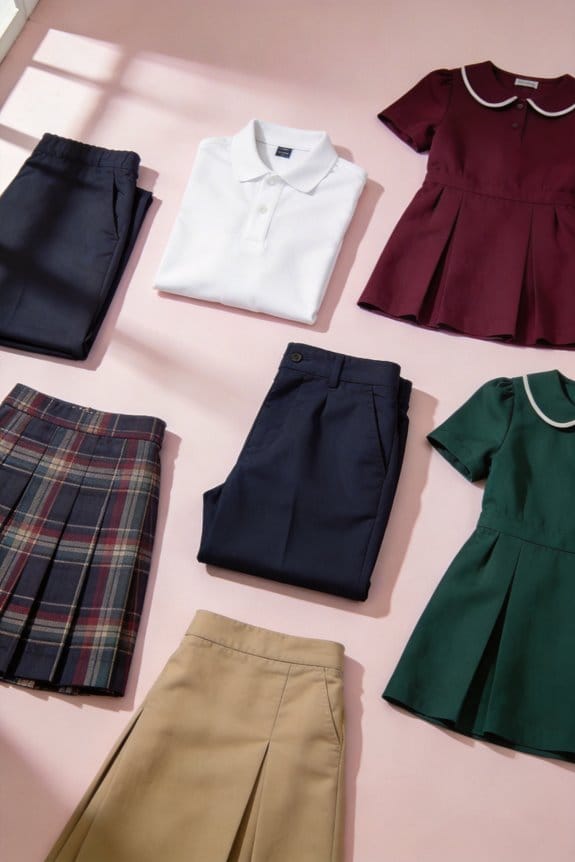

In public schools, dress codes typically require students to wear appropriate clothing that promotes focus and safety. Common restrictions include banning revealing attire like halter tops and miniskirts, as well as ensuring that pants aren’t sagging. There are often gender-specific guidelines that can affect how students express themselves. It’s important for us to understand these rules and advocate for fairness. We can explore more about rights and strategies to address dress code issues further.
Key Takeaways
- Dress codes typically allow clothing that is non-revealing, non-disruptive, and safe, promoting a focused learning environment.
- Commonly accepted attire includes t-shirts, jeans, and appropriate footwear that do not distract from educational activities.
- Clothing should not display offensive imagery, messages, or symbols that could incite controversy or disorder within the school.
- Accessories are usually limited to those that do not pose safety risks or distract from the educational process.
- Schools often allow some accommodations for religious attire, reflecting the importance of respecting students’ diverse beliefs and practices.
What Are the Basics of School Dress Codes?
Have you ever felt frustrated by school dress codes? You’re not alone. Understanding the basics of these rules can really help create a more supportive environment for everyone. Did you know that roughly 93% of public school districts have dress codes? The goal is to keep students focused and maintain a sense of discipline.
Dress codes typically outline what students can and can’t wear. Common restrictions include clothing that’s too revealing, distracting, or potentially unsafe. You might also notice that many dress codes have specific guidelines based on gender, which can limit what boys and girls are allowed to wear. And it’s not just about clothing. Around 59% of these dress codes even include rules about hairstyles. This can be especially concerning since it may disproportionately affect marginalized groups.
So, why does this matter? While enforcing dress codes can support school safety, it can also bump up against issues of freedom of speech. It’s crucial to have open conversations about these policies. Ask questions, get involved, and make sure that everyone’s voice is heard.
The best part is, addressing these dress codes doesn’t mean they have to stay the same. Are they really fair and inclusive for all students? It’s worth thinking about as you navigate through the school year. Let’s keep that dialogue going! New policies can benefit from understanding how style and design choices affect inclusiveness and expression.
Key Dress Code Restrictions
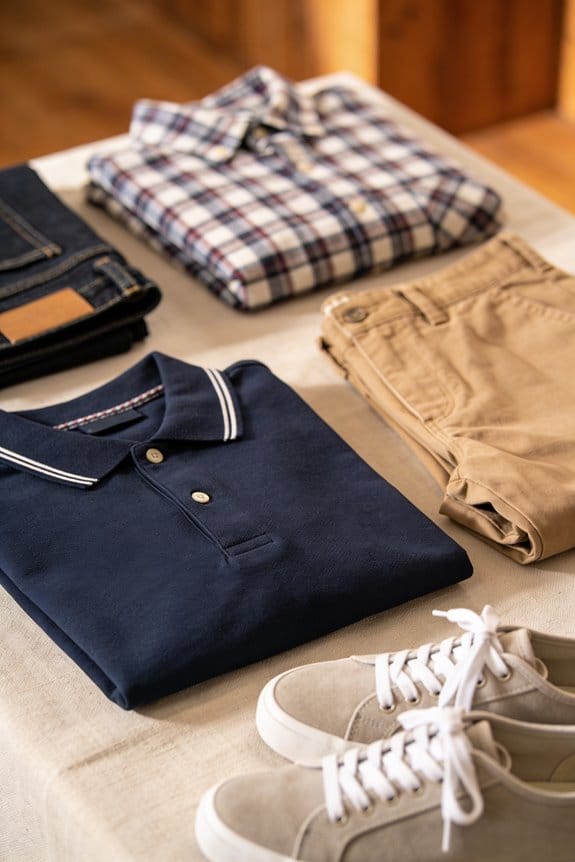
Navigating school dress codes can feel like a minefield, right? With so many rules about what you can and can’t wear, it’s easy to get frustrated. Public schools, in particular, often push a modesty message that leads to a long list of restrictions, especially for female students. Did you know that nearly 90% of dress codes prohibit halter tops and miniskirts? Boys aren’t completely off the hook either, with 69% of schools placing limits on things like sagging pants. It can be tough to keep track of it all.
And here’s something that might surprise you: hairstyle rules can impact Black students more than others. This gendered enforcement can create real challenges in schools. The truth is, dress code violations can hit academic performance hard, especially for female students and students of color, who often face tougher disciplinary actions.
So, what’s the key takeaway? Understanding these dress code restrictions can empower you and your peers. Here are a few tips to keep in mind:
- Know your school’s specific rules about clothing and hairstyles.
- If you’re ever unsure, ask a teacher or counselor for clarification.
- Keep an open dialogue with friends about how to express yourselves while staying within the guidelines.
Ultimately, getting familiar with dress codes isn’t just about compliance—it’s about feeling comfortable and confident in what you wear. Why not start by chatting with your friends about what works for you? After all, it’s all about finding that balance between style and school expectations. Remember, choosing breathable fabrics can help keep you comfortable throughout the school day.
Impact of Dress Codes on Student Rights
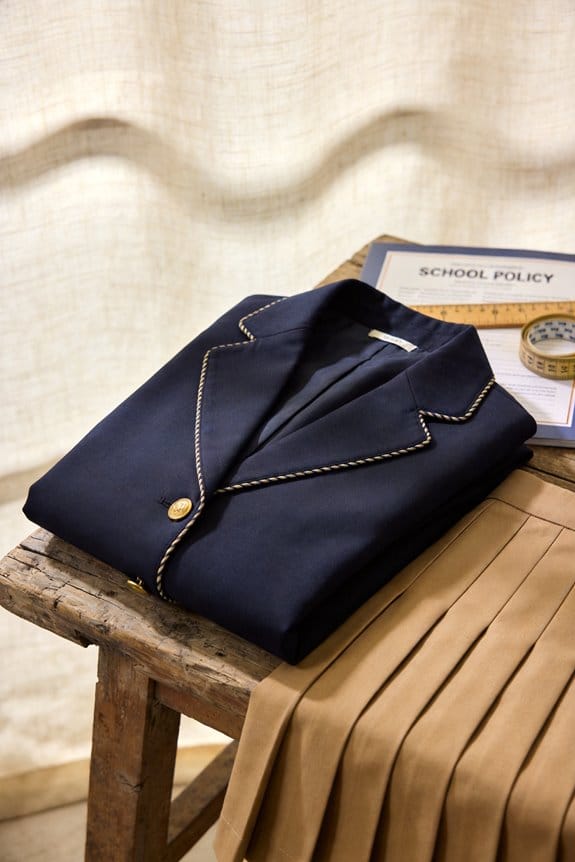
Have you ever felt like the dress code at school was just a little too strict? You’re not alone. Dress codes can seriously cramp your style and limit how you express yourself. Unfortunately, when they do that, it can lead to some pretty harsh penalties, like detention or even suspension. This is particularly frustrating when you consider that girls often bear the brunt of these restrictions, which raises some serious questions about fairness and gender equality.
For example, think about how certain hairstyle rules can disproportionately affect Black students. This is more than just a school rule; it could even cross the line into violating Title IX. So, why does this matter? Well, when you feel like your choices are limited, it can impact your learning environment, making it less enjoyable and more restrictive.
Here’s the trick: schools should really start including students in the conversation when it comes to creating or revising dress codes. After all, who knows better about what feels right and fair than the students themselves? Ignoring student input leaves many feeling disconnected from the rules they’re expected to follow.
To create a dress code that respects individual expression while still maintaining decorum, schools need to collaborate with students. It could involve open discussions or even surveys to gather opinions. A few key points to consider might be:
- How do these rules impact different students?
- What are the most common complaints?
- Are there alternatives that could provide the same level of decorum without sacrificing personal expression? One way to balance dress codes with comfort and practicality is by considering versatile styles that allow layering and personalization.
What Rights Do Students Have Regarding Dress Codes?
How can schools make sure students are aware of their dress code rights? Dress codes are a hot topic in public schools, and understanding them is key to protecting your rights. Sure, the First Amendment allows for self-expression through clothing, but remember, dress codes can be enforced as long as they don’t disrupt school activities.
So, what do you need to know? It’s crucial that dress codes are applied fairly. No one wants to feel like they’re being treated unfairly because of their race, sex, or religion. If you think about it, discriminatory practices can lead to legal issues for schools. Plus, schools are required by federal law to accommodate religious attire, which is something you should definitely keep in mind.
Gender also plays a role here. Title IX clearly states that schools can’t have different standards for boys and girls when it comes to dress codes. All students should have equal options for clothing choices, and that’s important for everyone.
If you’ve noticed a dress code that seems a bit off, don’t just let it slide. You have the right to challenge it. There are legal resources available to back you up if you feel your rights are being violated.
In the end, understanding your rights regarding dress codes isn’t just about fashion—it’s about respect and fairness. Have you ever felt unsure about your school’s dress code? Your dress code rights are worth knowing, and being informed helps you stand up for yourself and others.
Remember that dress codes often include guidelines about clothing comfort and style, which are essential for ensuring all students feel confident and unrestricted.
How Do Dress Codes Affect Gender Equality?
Have you ever noticed how dress codes in schools often seem to unfairly target girls? It’s frustrating to see rules that restrict things like halter tops and miniskirts while giving boys a pass on sagging their pants. This isn’t just about clothing; it’s about creating different standards based on gender. So, why does this matter? Because Title IX is supposed to protect against sex-based discrimination in education, and yet these dress codes can make it feel like some students get the short end of the stick.
It doesn’t stop there, either. Think about how hairstyle rules can impact students of color. These policies can lead to even more inequality in what’s already a tricky situation. There really needs to be a shift toward dress codes that embrace all identities and offer a more inclusive environment.
Here’s the trick: challenge those unfair practices. You can help create schools that honor everyone, not just a select few. Imagine a space where all students feel comfortable expressing themselves through their clothing and hairstyles. It’s time for schools to adopt dress codes that celebrate diversity.
In short, unfair dress codes contribute to a culture that undermines gender equality. It’s essential to push for policies that respect every student’s identity. Implementing guidelines that consider material comfort and durability can also help make dress codes more practical for all students. So, what will you do to advocate for change in your school?
10 Ways Students Can Challenge Unfair Dress Codes
Have you ever felt frustrated by a dress code that just doesn’t make sense? You’re not alone. Many students are facing unfair policies that seem outdated or even discriminatory. The good news is that you have the power to push for change.
One effective way to get started is by forming or joining a student advocacy group. These groups can amplify your voice and help bring attention to your concerns. It’s all about creating a safe space to discuss issues and strategies. Getting involved in school board meetings is another great move. When you can present your concerns as part of a larger collective, it makes them harder for administrators to ignore.
So, here’s the trick: conduct equitable audits to highlight any unfair practices in how dress codes are enforced. This can really shed light on inconsistencies and unfair treatment. Plus, knowing your First Amendment rights is key. The case Tinker v. Des Moines confirms that students maintain certain rights regarding free expression.
Don’t forget to tap into resources from organizations like the ACLU. They can provide guidance and support to challenge dress codes that seem unjust. Truth is, when you band together with your peers, it can lead to real change in your school.
In a nutshell, advocating for a fair dress code isn’t just about clothing; it’s about standing up for your rights. Additionally, being organized and prepared, much like using organizational tools in school supply bundles, can strengthen your advocacy efforts.
So, what steps will you take to make your voice heard?
Frequently Asked Questions
What Clothing Is Not Allowed in School?
In our schools, prohibited attire includes anything with inappropriate graphics, offensive slogans, or visible undergarments. We also face length guidelines, accessory restrictions, headwear policies, and footwear rules that vary seasonally to promote a focused environment.
What Is the 3 Finger Rule Dress Code?
The three finger guideline’s a dress code rule ensuring modesty, facing enforcement challenges and student opinions varied by district. It often leads to consequences for violations, while parental involvement and cultural considerations influence clothing modifications and exceptions.
What Are Some Examples of School Dress Codes?
Think of a canvas, vibrant and varied; our school’s dress code blends school uniforms, casual wear, and formal attire while allowing summer clothes, winter layers, and cultural attire—but we must respect graphic tees and accessories policy limits.
Do Public Schools Have a Dress Code?
Yes, public schools often have dress codes. We recognize these policies aim to balance professional appearance standards, student expression rights, and cultural attire acceptance, all while considering health impacts and promoting gender-neutral clothing and parental involvement.