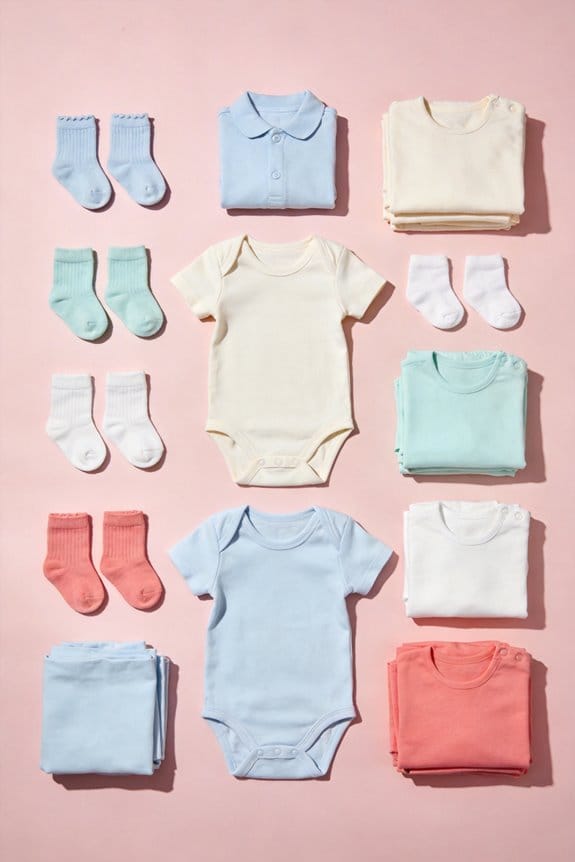
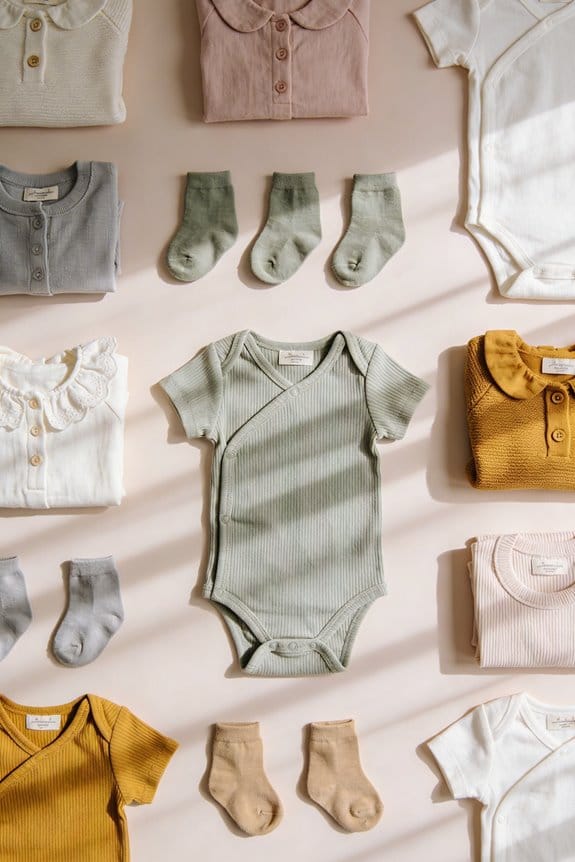

When preparing for a newborn, we should aim for around 6-8 bodysuits, 4-6 pairs of soft pants, and 4-6 footie pajamas. This allows for daily outfit changes while avoiding overbuying. It’s important to choose soft, breathable fabrics that guarantee comfort and safety. Seasonal factors also play a role; for example, opt for heavier layers in winter. By focusing on these essentials and organizing by size, we can maintain a practical wardrobe. There’s more to reflect on as we create the perfect setup.
Key Takeaways
- Aim for 6-8 bodysuits or rompers, 4-6 soft pants, and 4-6 sleepers to cover daily needs without excess.
- Include 2-3 fancy outfits for special occasions while keeping everyday clothing to essentials.
- Consider seasonal factors when choosing clothing; prioritize layering in winter and breathable fabrics in summer.
- Regularly check baby’s weight to adjust clothing sizes; include growth-accommodating sizes, like 0-3 months.
- Organize clothes by type and size to avoid overbuying; embrace hand-me-downs to save money and reduce waste.
How to Determine the Right Number of Baby Clothes for Your Newborn?
When you’ve got a newborn, figuring out how many clothes you really need can feel overwhelming. You want them to be comfortable but also dressed practically. Think about this: you’ll go through outfits more quickly than you might expect because of all those spit-ups and diaper leaks!
Try this: aim for 6-8 bodysuits, 4-6 pairs of pants, and around 4-6 sleepers or footie pajamas. This should help cover daily changes without drowning you in laundry. It’s also smart to stick to newborn sizes, usually 0-3 months, since babies grow at lightning speed during those first few weeks.
Also, don’t forget to grab 2-3 hats and 4-6 pairs of socks. These little extras can add warmth when you really need it. So, why does this matter? With a minimal assortment of clothes, you lessen laundry stress while keeping your baby cozy and looking cute.
Choosing organic baby clothes can enhance your baby’s comfort and reduce the risk of skin irritation.
At the end of the day, it’s all about finding the right balance that works for you and your newborn. What do you think will work best for your little one?
Essential Newborn Clothing Checklist for Minimalist Parents
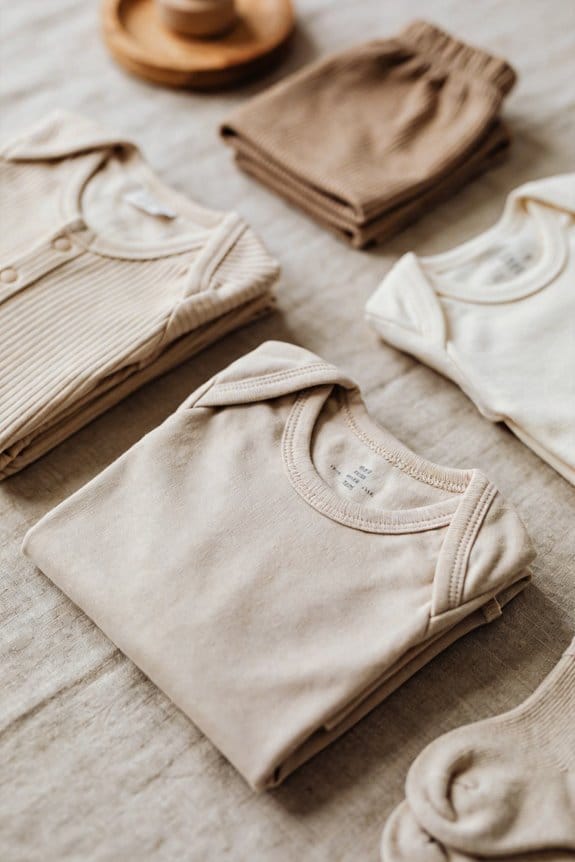
Navigating those early days with a newborn can feel overwhelming. One thing that can really help? A simple, well-thought-out clothing checklist. This isn’t just a handy guide; it can save you time and energy when you really need it the most.
Start with 6-8 bodysuits or rompers. Look for ones with lap or envelope shoulders for quick dressing—trust me, those late-night changes go much smoother this way. Then, consider grabbing 4-6 pairs of soft pants. They’re so comfortable and make it easy to mix and match outfits throughout the week.
Footies or gowns are essential too. I recommend having 4-6 on hand, especially those with two-way zippers. They’re a lifesaver for those midnight diaper changes when you’re half-asleep and just trying to get the job done. And don’t skip the hats! You’ll want 2-3 to keep your baby warm, especially in cooler months, and 4-6 pairs of socks will keep those little feet cozy year-round.
Now, what about those special occasions? It’s a good idea to have 2-3 fancy outfits ready, just in case. But keep in mind that little ones have a knack for creating messes at the most inconvenient times.
Choosing clothes made from soft, breathable fabrics is crucial to keep your baby comfortable and safe, especially for sensitive skin.
So, why is this checklist important? Having a focused list not only eases your mind but also keeps your baby stylishly comfortable as you both adjust to this new lifestyle. Remember, less is more when it comes to baby clothing.
Keep this simple checklist handy, and you’ll be better prepared to care for your newborn without feeling overwhelmed. What’s on your must-have list for your little one?
Understanding Newborn Sizes: What to Buy
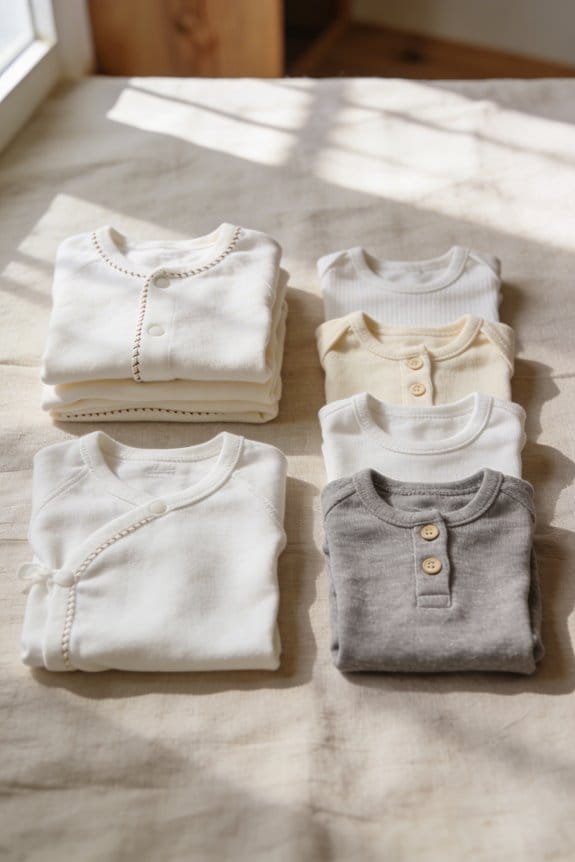
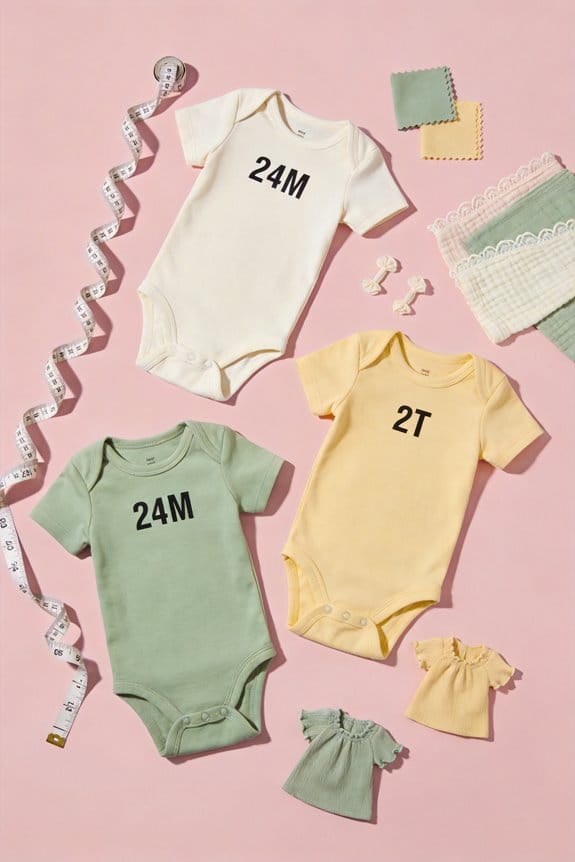
Choosing the right newborn sizes can feel like a lot, right? With all the options out there, it can be tricky to know what to buy for your little one. Newborn sizes usually fit babies that weigh between 5-8 pounds and measure roughly 17-21 inches long. So, what do you really need?
It’s smart to snag around 6-8 bodysuits and 4-6 pairs of pants. Babies grow faster than we can keep up with, so these sizes might not last long. If you’re expecting a preemie, don’t forget to look into preemie sizes for those tiny ones under 6 pounds.
Seasonal factors also play a role in your choices. If you’re having a winter baby, heavier layers and cozy fabrics are a must. On the flip side, summer babies thrive in lighter, breathable outfits. So, why does this matter? Well, focusing on the essentials first can help you avoid overspending on clothes that might not even fit your baby for long.
Choosing clothing made from soft organic cotton can help enhance comfort and reduce irritation for your newborn’s sensitive skin.
After the initial purchases, you can always wait to see how your baby grows and what their style preferences are before making additional buys. Starting with the basics is a great way to ease the stress of preparing for a new arrival.
Ultimately, the right approach will save you time and money while keeping your baby comfy. What’s one piece of clothing you think no newborn should be without?
Managing Daily Outfit Changes for Your Newborn
Managing daily outfit changes for your newborn can definitely feel overwhelming at times. With all the diaper leaks and spit-up, you can expect to change their clothes multiple times a day. To make things easier, having about 7-10 bodysuits or gowns stocked up is super handy. Most families do laundry every 2-3 days, so keeping a few extras around can really help with those surprise messes.
When it comes to getting your baby dressed, it’s important to go for designs with snaps or zippers. These simple options make dressing and diaper changes a breeze. You’ve got enough on your plate without struggling with complicated outfits, right? Also, keep in mind that newborn sizes typically fit little ones weighing 6-8 pounds for just a few weeks, so it’s worth checking their weight and adjusting your wardrobe as needed.
Washing your baby’s clothes with gentle, hypoallergenic detergent is a must. This helps prevent any skin irritations and keeps your little one comfy. You want them to feel good in their cozy outfits, especially when they’re so tiny and sensitive. Choosing soft, breathable fabrics can further help minimize irritation and ensure your baby’s comfort throughout the day.
Choosing Comfortable and Safe Clothing for Your Newborn
Finding cute outfits for your newborn can feel a bit overwhelming, can’t it? With all those daily outfit changes, you want to make sure that whatever you choose is comfortable and safe for your little one. Start by looking for baby clothes made from organic cotton. This fabric is soft and breathable, making it ideal for baby skin.
When it comes to dressing your baby, opt for designs with snaps or zippers. They make getting your baby dressed a whole lot easier, and trust me, quick diaper changes are a must! You want to steer clear of any tight bindings or loose strings. So, why does this matter? Well, it’s all about keeping those tiny humans comfy and safe!
Don’t forget, dressing your baby in layers is a smart idea, especially depending on the season. In summer, lightweight fabrics work wonders, while in winter, a cozy hat or sweater can keep your baby warm. The best part is that layering allows you to adjust based on the temperature throughout the day.
And here’s a tip: always wash new clothes in a gentle, hypoallergenic detergent. This simple step helps eliminate any irritants and sets the stage for a snug fit right from the start.
Choosing bodysuits with nickel-free snaps can prevent allergic reactions and add extra comfort during outfit changes.
How to Wash and Care for Baby Clothes
When it comes to washing baby clothes, you might be wondering how to tackle all those stains and keep everything safe for your little one. Here’s a tip: always wash new clothes first. Those tags and packaging can leave behind irritants that just aren’t good for your baby’s sensitive skin.
Using a gentle detergent is a must. This’ll help you avoid any allergens that could upset your baby’s delicate skin. So, what should you look for in a detergent? Look for something free of dyes and perfumes. You want to keep things simple and safe.
Now, when it comes to washing, stick with cold or warm water. Hot water might seem like a good idea for getting rid of stains, but it can wear out the fabric quicker. Honestly, I’ve found that washing every 2-3 days works wonders. With all the spit-ups and diaper leaks, you’ll stay ahead of the game with plenty of fresh clothes.
And here’s another handy tip: consider using mesh laundry bags. They’re perfect for delicate items like onesies and socks, protecting them from damage during the wash while helping to keep their shape.
Also, choosing clothes made from organic cotton can make care easier because these materials typically withstand frequent washing without losing softness or shape.
Tips for Avoiding Overbuying Baby Clothes
Are you overwhelmed by the thought of buying baby clothes? You’re not alone! It’s easy to get carried away with all the cute outfits and accessories out there. But let’s talk about how a minimalist baby wardrobe can actually make life simpler.
To avoid piling up clothes that your baby will outgrow in no time, focus on the essentials. Aim for around 6-8 bodysuits, 4-6 pairs of pants, and 4-6 footies. That’s all you really need for a solid start. Another tip? Wait until after your baby arrives to shop for sizes. This way, you can measure what works best for your little one and steer clear of buying things they’ll never wear.
Newborns grow quickly, so it makes sense to keep the inventory low on those smaller sizes. Keep your baby clothes organized by type and size. This can help you see exactly what you have and what you might need, cutting down on any impulse buys.
And don’t overlook the power of hand-me-downs. Accepting clothes from friends and family helps you stick to your budget and reduces waste while still giving your child a great wardrobe.
Additionally, considering the season and temperature is key when selecting fabrics and layer amounts to keep your baby comfortable, especially in warm weather with breathable clothing choices.
What to Look for When Buying Baby Clothes
What can you do to ensure your baby’s comfort and safety when you’re picking out clothes? It all starts with choosing fabrics that are gentle and breathable. Look for materials like cotton and bamboo viscose. These options help prevent skin irritation while keeping your little one cozy and comfy.
When it comes to getting dressed or changing diapers, fastenings matter. Go for easy-to-use options like zippers or snaps. They make life a lot simpler during those busy mornings or late-night changes. Think about colors and designs too. Gender-neutral colors are great for mixing and matching, and simple designs are always in style.
As babies grow so quickly, it pays to choose sizes that accommodate that growth. Instead of opting for newborn sizes, aim for options like 0-3 months. This way, you’ll get more wear out of the clothes before your baby outgrows them.
Let’s not forget about safety certifications. It’s worth checking for labels like GOTS or OEKO-TEX, which indicate the clothes are safe for your baby’s sensitive skin.
Choosing clothes made from certified organic cotton also helps minimize irritation from harmful chemicals, giving you peace of mind.
Truth is, when you put thought into choosing clothes, you’re helping your baby feel their best. What favorite clothing items have you found that really work for your little one?
Frequently Asked Questions
How Many Clothes Does a Baby Really Need?
A baby really needs about 12 essential clothing items, plus seasonal wardrobe adjustments. We find incorporating practical laundry tips helps; rotating outfits keeps things manageable while ensuring our little ones are always comfortable and stylish.
What Is the 3-3-3 Rule for Clothes?
The 3-3-3 rule for clothes suggests we have three bodysuits, three bottoms, and three sleepers, providing minimalist wardrobe benefits. This guarantees our baby clothing essentials are practical, manageable, and easy to mix and match daily.
What Is the 5 8 5 Rule for Babies?
Imagine a garden thriving with just enough essentials. The 5 8 5 rule gives us a well-tended wardrobe: five bodysuits, eight pants for layering, and five nighttime outfits, meeting our baby’s seasonal needs efficiently.
How Many Baby Clothes Do I Need Minimalist?
We need about 6-8 essential clothing items, considering seasonal clothing needs and how often we do laundry. This balance helps us manage messes without overwhelming ourselves with too many baby clothes.