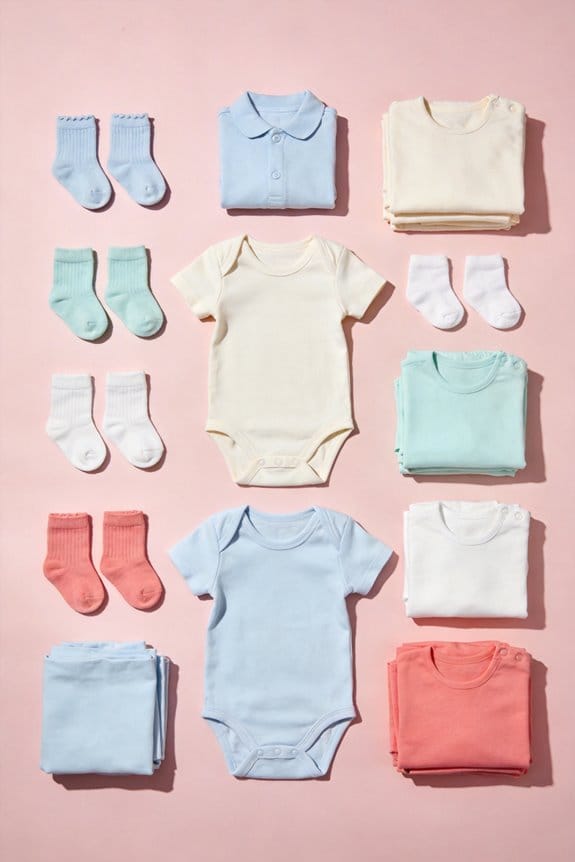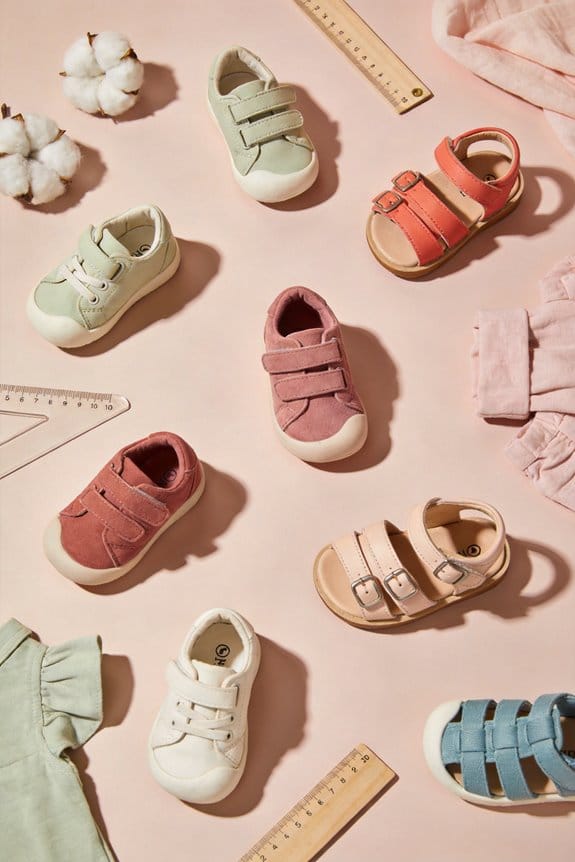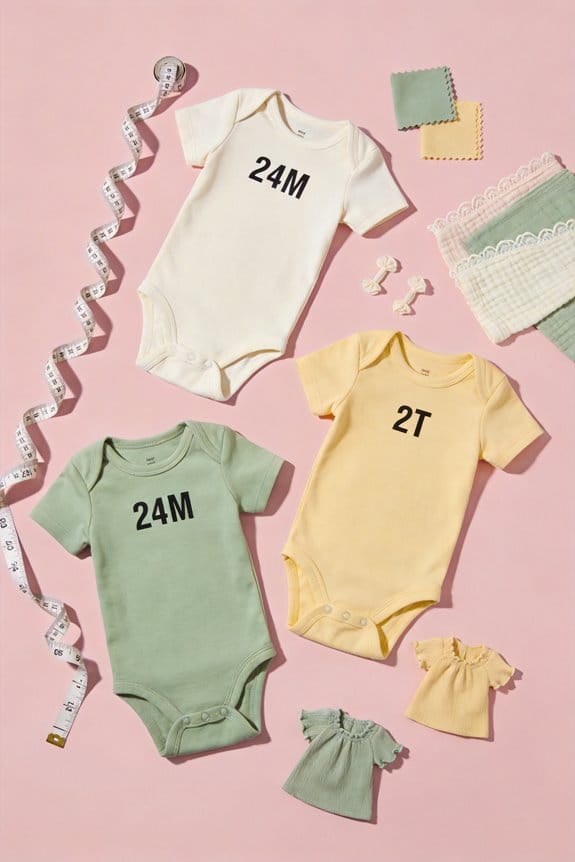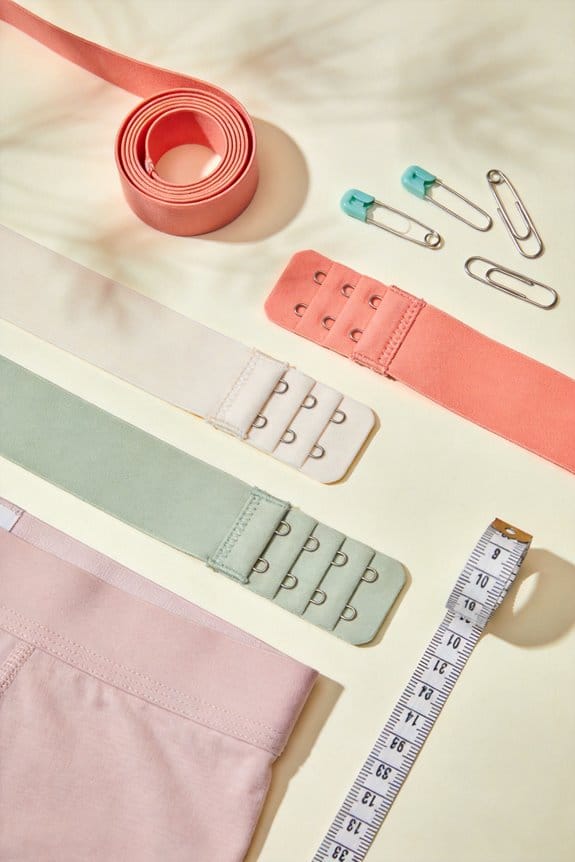
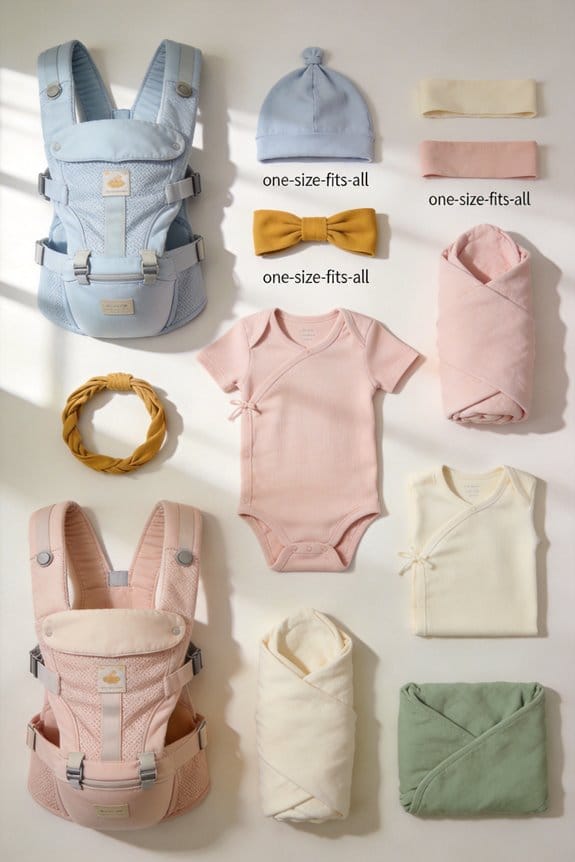

The concept of “one size fits all” in baby accessories can mislead us when it comes to safety and comfort. Babies are unique, with different sizes and developmental needs; what fits one may not suit another. Choosing the correct size is crucial to avoid discomfort and guarantee proper growth. For example, adjustable gear can adapt as your baby grows, making them a better investment. Understanding these nuances helps us make informed choices for our child’s well-being, leading us to explore more essential tips and gear.
Key Takeaways
- “One size fits all” may not accommodate the diverse body shapes and sizes of babies, leading to discomfort and potential leaks.
- Proper sizing is essential for baby accessories to ensure safety, comfort, and support healthy development.
- Observing a baby’s reactions to gear helps in identifying which styles and sizes work best for their unique needs.
- Adjustable or multi-size options provide better adaptability as babies grow, unlike rigid “one size” products.
- Secondhand gear often offers better-quality options at a fraction of the cost, avoiding reliance on insufficient “one size fits all” solutions.
Why “One Size Fits All” Doesn’t Apply to Baby Accessories
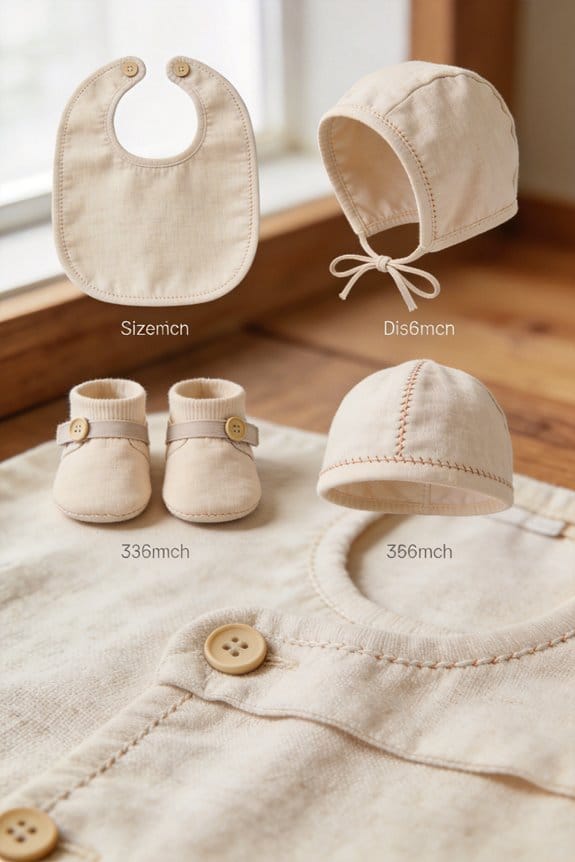
Have you ever thought about why “one size fits all” just doesn’t cut it for baby accessories? Picture this: your little one is growing like a weed, and suddenly those diapers don’t fit anymore. Using the wrong size during changes can lead to leaks or, worse, a cranky baby due to discomfort.
When it comes to potty training, there’s no one-size-fits-all solution there either. Some babies might do better with one type of training pants, while others may prefer a completely different style. Noticing what works best for your child can make a world of difference.
So, why does this matter? It’s all about safety and comfort. Accessories made for specific weights and age ranges ensure that your baby is happy and secure as they grow. Keeping an eye on sizes isn’t just about convenience; it’s about providing a better experience for your little one.
Consider this: what if unsuitable accessories made your parenting journey harder? Knowing how crucial the right size is for your baby’s well-being and development is key to a smoother ride. Choosing accessories with adjustable size features allows for better fit and comfort as your baby grows.
How to Identify Your Baby’s Unique Needs
How can you really figure out what your baby needs? It’s one of the biggest challenges of parenting. Every little one is so different, and their comfort levels can change constantly based on what they’re going through and what they like.
Take a moment to observe how your baby reacts to different clothes and materials. For example, if your little one seems upset when wearing certain fabrics, it might be time to switch them out for something softer. Comfort matters, especially since babies can be pretty vocal about their dislikes! Keep an eye on how well their clothes fit, too. Babies grow quickly, and something labeled “one size fits all” might not keep them comfortable over time.
Here’s a simple tip: regularly check the fit of everything your baby wears or uses. This could mean anything from onesies to sleep sacks, or even diaper gear. You want to make sure they’re not squished or pinched in any way.
Don’t hesitate to reach out for a little extra help. Consulting with a pediatrician can provide you with tailored advice specific to your baby’s needs. Plus, engaging with parenting communities can open doors to recommendations and personal stories that could be really helpful.
And speaking of discovery, if you’re experimenting with diapers or feeding tools, try different brands to see what works best for your baby’s body type. Every tiny human is unique, and finding the right match can make all the difference in their daily comfort and happiness.
One often overlooked factor is the type of fabric used in baby clothing; choosing soft, breathable jacquard fabric dresses for special occasions can help maintain comfort and prevent irritation.
In short, being attentive to your baby’s cues is key. Their individual needs can shape their well-being significantly. So, what’s been your experience with finding the right fit for your baby?
Choosing the Right Size for Your Baby’s Gear
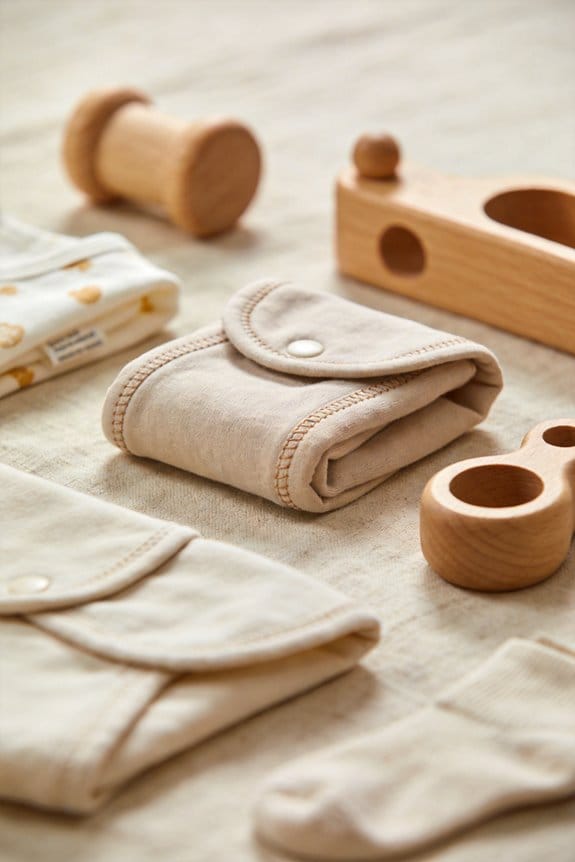
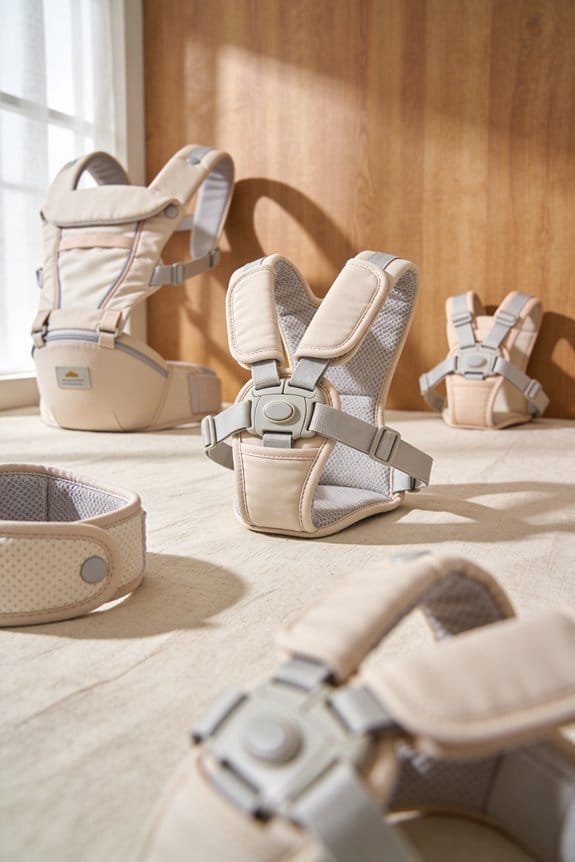
Choosing the right size for your baby’s gear can feel a bit overwhelming. After all, every baby is unique, right? So, when you see that “one size fits all” label, it’s important to take it with a grain of salt. Sizes can vary widely from one brand to another. Sometimes, outfits or carriers don’t have enough adjustability for a perfect fit.
Try this: think about your baby’s age, weight, and body shape before making a purchase. This is key in avoiding any discomfort or leaks that could lead to a messy situation for both you and your little one. Instead of banking on that “one size,” explore adjustable or multi-size options that adapt to your baby’s growth.
Here’s the trick: dive into product reviews! They can give you insight into how different items work for various baby shapes and sizes. Honestly, ensuring your gear fits well can save you from unnecessary shopping later on and make life a whole lot easier for both you and your baby. Always prioritize proper sizing for comfort to promote an enjoyable experience for your infant.
Why Buy Secondhand Baby Gear: Key Benefits
Have you ever looked at the price tags on baby gear and felt your heart sink? It can get really expensive, can’t it? That’s why buying secondhand baby gear can be such a smart move. You can often find items priced 50-70% less than what you’d pay at retail stores. Think about what you could do with those savings—investing in essentials for your family or perhaps splurging on a cute outfit for your little one.
Plus, choosing secondhand isn’t just about saving money; it’s also a great way to help the environment. By giving baby gear a second life, you’re reducing waste and supporting sustainability. How cool is that? You might even stumble upon some unique vintage treasures, like adorable sleep sacks, adding a special touch to your child’s nursery.
The reality is that many of these secondhand items are in excellent condition because babies outgrow gear so quickly. This means you’re likely to find gear that’s only been used for a short time. When you shop at local resale shops or charities, it’s a win-win: you get affordable options and support important community causes at the same time.
Additionally, you can find beautiful and practical items such as a dressy Daisy infant baptism outfit that combine style and comfort for your little one’s special occasions.
Testing Baby Gear Before You Buy
How can you be sure the baby gear you choose fits your family’s needs? It can feel overwhelming when there’s so much out there, but testing baby gear before committing to a purchase is key. Try borrowing or renting items from friends or local parenting groups; nothing beats real-life experience! Getting hands-on with the gear lets you figure out if it’s actually comfortable and functional for your day-to-day life.
Many retailers make it easy for you to test products by offering flexible return policies. Take advantage of this! Bring items home, give them a spin, and don’t hesitate to return anything that doesn’t meet your expectations. Participating in trials is another great way to gain insights before buying something. Plus, you might discover features that you love or dislike that you hadn’t even considered.
And don’t underestimate the value of recommendations from other parents. Their firsthand experiences can really guide you as you test different gear out. So, why does it matter? Investing in the right baby gear means you’re prioritizing your child’s safety and comfort, and that’s a big deal. Remember to also consider safety and snugness features to ensure your baby’s protection during use.
In a nutshell, testing before you buy is the way to go. It could save you time, money, and a lot of stress. What’s the best piece of baby gear you’ve tested that made all the difference?
Must-Have Baby Gear for Every Developmental Stage
Every parent wants to ensure their baby has the right gear to support growth and development. So, what do you really need for those first years?
For your baby’s first year, think soft rattles and play gyms. These are great for stimulating those little senses. As they start to grow, adding activity centers and stacking toys can really help with their motor skills. Around six months, introduce suction plates and those nifty Munchkin 360 cups. They’re perfect for encouraging self-feeding, which can be a messy but fun experience!
Once your little one starts crawling, a safe playpen becomes a must-have. It’s a great way to give them a secure space to explore without worrying about their safety. If your home has stairs, baby gates should definitely be on your list. A comfortable baby carrier can also be a lifesaver. Look for one that’s adjustable for all stages, as it helps keep that bonding time strong.
And let’s talk about sleep. It’s crucial to verify that your crib meets safety standards. Plus, using organic cotton mattress pads and fitted sheets adds an extra layer of comfort and safety for your baby.
Truth is, having the right gear at each stage can make parenting a bit smoother. What gear has made a difference for you?
Also, choosing gear with size and fit options is essential to ensure your baby’s comfort and safety at every age.
Frequently Asked Questions
Are Baby Carriers One Size Fits All?
Baby carriers aren’t truly one size fits all. While we appreciate ergonomic designs and adjustable features, fitting varies by body type. Prioritizing babywearing safety means testing carriers ourselves to guarantee comfort for both parent and child.
What Is the 5 8 5 Rule for Babies?
The 5-8-5 explanation outlines baby size guidelines: five shirts, eight pants, and five outerwear pieces guarantee an ideal baby fit. This approach helps us manage clothing efficiently while keeping our little ones stylish and comfortable.
Is It Better for Baby Clothes to Be Too Big or Too Small?
We’ve found it’s better for baby clothes to be a bit big. Think of a tree growing; it needs space. With growth spurts impacting baby size considerations, loose clothing guarantees safety, comfort, and room to grow.
Do 3 Month Baby Clothes Go With 0-3 or 3-6?
We’ve found that 3 month clothing often overlaps with 0-3 sizes in many brands. Given baby growth varies, it’s wise to compare sizes carefully and mix both ranges for the best fit.